 how-to
What Defines an Authentic Scratch Kitchen? 7 Signs
Table of Contents
- What Defines an Authentic Scratch Kitchen? Start With the Scratch Kitchen Meaning
- What Counts as Scratch-Made Food (and What Doesn't)
- The Benefits of a Scratch Kitchen for Diners
- What Restaurants Make In-House: A Station-by-Station Breakdown
- How to Verify Scratch Cooking: A Practical Checklist for Diners
- Questions to Ask When Dining Out
- Conclusion: Why Scratch Cooking Matters
- Frequently Asked Questions
Last Updated: October 14, 2026
What Defines an Authentic Scratch Kitchen? Start With the Scratch Kitchen Meaning
An authentic scratch kitchen is a restaurant where cooks prepare dishes from raw ingredients on site, rather than reheating pre-made food from a supplier. That means whole vegetables arrive in the walk-in cooler, not diced in a plastic bag. It means sauces start with onions in a pan, not a powder mixed with water.
At Pyke's Crossroads Restaurant, we run a 95% scratch kitchen. That number matters because "scratch" has no legal definition in the United States. The FDA Food Code governs how food is stored and handled, but it does not certify who chopped the onions. Anyone can print "scratch-made" on a menu.
So how do you tell the difference? Below, we break down what real scratch cooking looks like, what it costs a restaurant to do it, and the exact questions you can ask to confirm it before you order.
The short answer: look for early-morning prep, in-house sauces and stocks, and a menu that shifts with the seasons.
What Counts as Scratch-Made Food (and What Doesn't)
Scratch-made food is any dish assembled from raw, whole ingredients in the restaurant's own kitchen. Pre-made food is anything a supplier cooked, portioned, or froze before it reached the building.
Here's the dividing line most people miss:
- Counts as scratch: hand-rolled dough, stocks simmered from bones, sauces built from aromatics, dressings whisked in-house, fresh-cut produce
- Does not count: frozen fries dropped in a fryer, bagged soup base, pre-cooked proteins, jarred marinara poured over pasta, pre-formed burger patties
There's a gray zone. A kitchen might make its own pizza dough but buy pre-shredded cheese. That's still mostly scratch, but it isn't 100%.
The Benefits of a Scratch Kitchen for Diners
Fresh ingredients taste different. That's the obvious benefit, but it's not the only one.
When a kitchen cooks from scratch, you get control over seasoning, sodium, and allergens. A house-made soup can be adjusted for a guest who avoids gluten or dairy. A pre-made base cannot.
Scratch cooking also means seasonal ingredients show up on the menu when they're actually good. A kitchen that makes its own sauces can change them weekly. A kitchen reheating frozen product is locked into the same menu year-round.
There's a trade-off, and we'll be honest about it: scratch kitchens run on long hours and careful preparation. Early-morning prep starts before dawn. Recipe development takes trial and error. That labor is part of why scratch food often costs more, and why the quality is more consistent when a team commits to it.
What Restaurants Make In-House: A Station-by-Station Breakdown
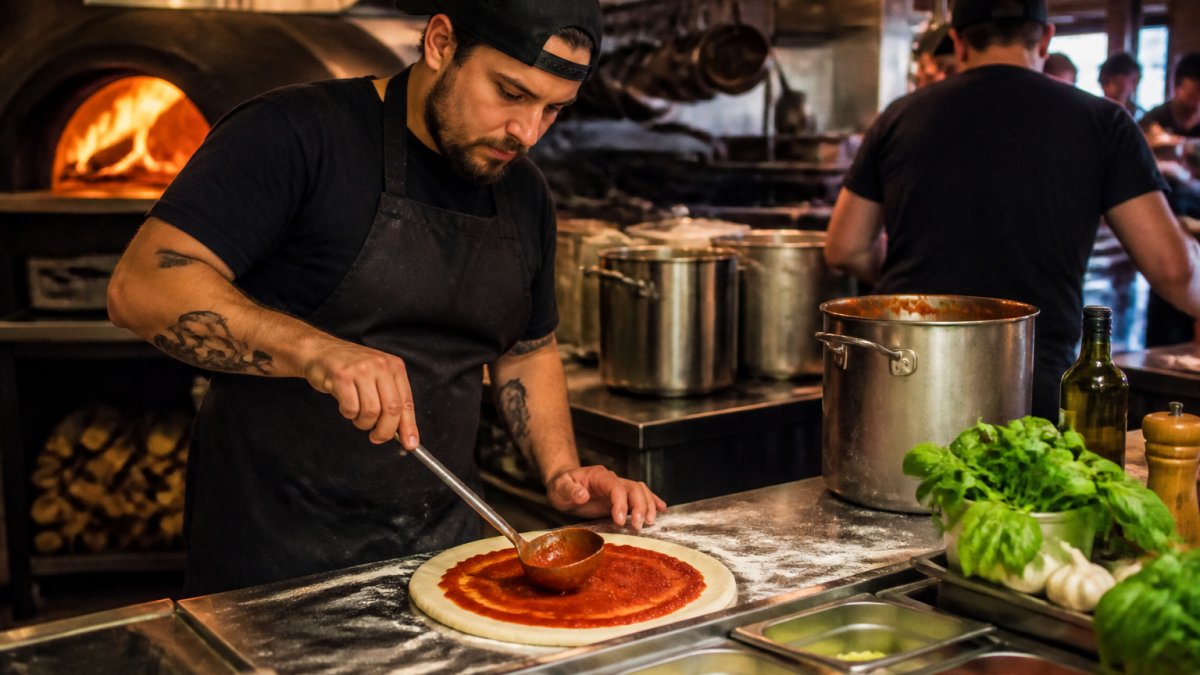
A scratch kitchen is organized by station, and each one tells you something about how the food is made. More importantly, each station carries its own labor, storage, and food-safety demands. Those demands are the real evidence of scratch cooking, not the menu language.
- Prep station: washing, chopping, and portioning whole produce; butchering and trimming proteins. This is the most labor-intensive station and the first to show strain. A scratch prep list typically starts before dawn because produce has to be washed, cut, and portioned for the day's service. Under the FDA Food Code, cut leafy greens and cut tomatoes are time/temperature control for safety foods and must be held at 41°F or below, which means a scratch kitchen needs cold-holding capacity that a reheating kitchen does not.
- Sauce and stock station: simmering stocks from bones, building sauces and dressings from scratch. Stocks take hours, not minutes, and they must be cooled rapidly after cooking to move safely through the temperature danger zone. A kitchen that makes its own stock owns a walk-in full of labeled, dated containers, a visible operational signature.
- Bakery station: mixing and proofing dough, baking bread and baked goods fresh daily. Dough needs time, space, and temperature control. Proofing is a schedule commitment: a kitchen that bakes daily has to plan around fermentation, not around a delivery truck.
- Line station: cooking soups, sandwiches, and entrees to order during lunch and dinner service. Made-to-order cooking changes ticket times. A scratch line is usually slower per plate than a reheat line, and that trade-off is deliberate.
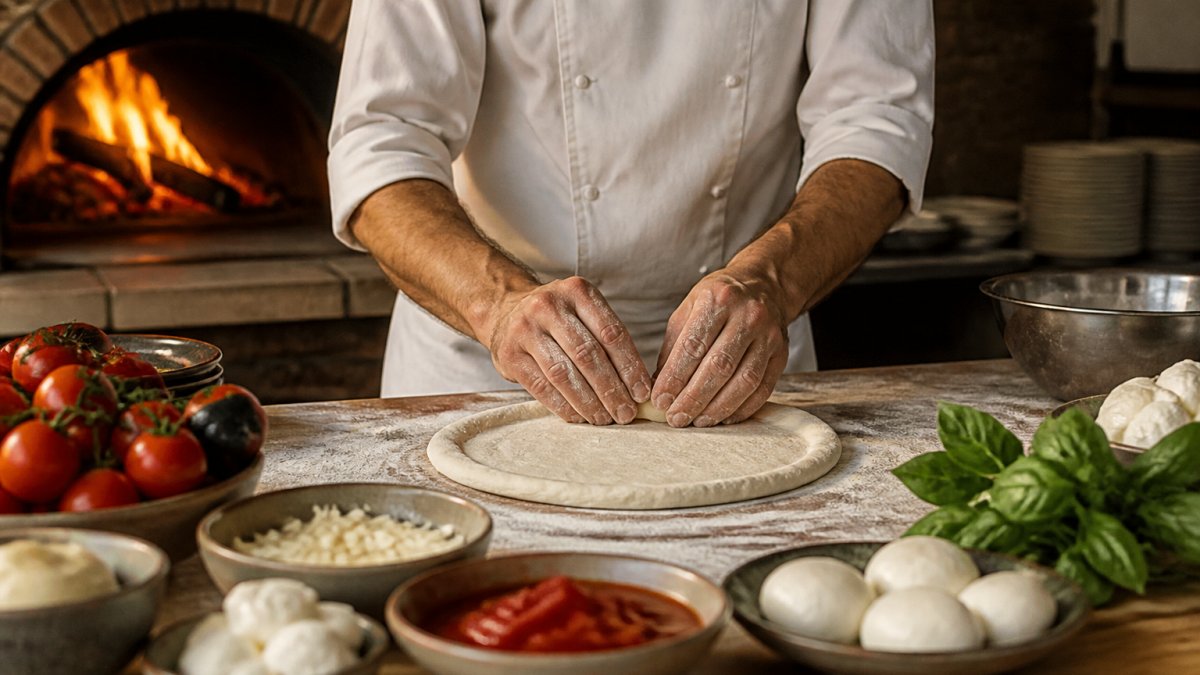
- Pizza station: stretching dough by hand and baking in a wood-fired oven. Hand-stretched dough is a daily task, it cannot be prepped weeks ahead without quality loss.
At our restaurant, the pizza station is where the scratch approach shows most clearly. We bake hand-crafted pizzas in the only wood-fired ovens in Wood County, imported from Italy. The dough is made in-house, the sauce is built from whole tomatoes, and the oven does the rest.
How to Verify Scratch Cooking: A Practical Checklist for Diners
You can't audit a kitchen from your table, but you can gather real evidence. There is no shared certification, seal, or government benchmark that designates a restaurant as a scratch kitchen in the United States, the FDA Food Code governs safe storage and handling, not who chopped the onions. That means verification is about observable indicators, not labels. Here's a checklist we'd want a guest to use anywhere:
- Ask what was made today. Scratch kitchens have a clear answer. Reheating kitchens get vague.
- Ask when the stock was made and how it was cooled. This is the single most revealing question. Rapid cooling after cooking is a real food-safety step, and a kitchen that makes its own stock will know the answer.
- Look at the menu size. A short, focused menu usually means fresh preparation. A 200-item menu often means frozen inventory.
- Check for daily specials. Specials built around what's fresh signal real cooking.
- Ask about the sauces and dressings. House-made versions are a strong sign, and staff should be able to name the base ingredients.
- Notice the seasoning. If every dish tastes identically salty, it likely came from the same supplier base.
- Watch the timing. Some dishes take longer because they're made to order. That's a good sign, not a flaw.
- Read customer reviews. Diners mention freshness and flavor when a kitchen earns it.
- Ask where key ingredients come from. Sourcing transparency is rare, and a kitchen that can name its produce or meat supplier is signaling real supply relationships.
Use this table to compare what you're seeing:
| Signal | Scratch Kitchen | Reheating Kitchen |
|---|---|---|
| Menu size | Short, focused | Very long |
| Daily specials | Change often | Rare or fixed |
| Sauces | Made in-house | Bought in |
| Stock | Simmered from bones, cooled and dated | Base or powder |
| Prep timing | Early-morning prep | Minimal prep |
| Seasonality | Menu shifts with seasons | Same year-round |
| Sourcing | Staff can name suppliers | No clear answer |
Questions to Ask When Dining Out
The fastest way to confirm scratch cooking is to ask directly. Staff at a real scratch kitchen are proud to answer.
Try these:
- "What did the kitchen make from scratch today?"
- "Are the soups and sauces made here?"
- "Is the bread baked in-house?"
- "Do you have options for dietary needs, and can the kitchen adjust a dish?"
- "What's in season right now on the menu?"
A confident, specific answer tells you more than any menu label. If the server can name the stock, the dressing, or the bread, you're in the right place.
Conclusion: Why Scratch Cooking Matters
Scratch cooking is more work, more cost, and more risk than reheating. That's exactly why it's worth seeking out. When a kitchen commits to fresh ingredients, in-house preparation, and honest flavors, the food shows it.
If you're looking for a scratch kitchen in the Winnsboro area, we'd love to host you. Pyke's Crossroads Restaurant runs a 95% scratch kitchen with wood-fired pizzas, more than 60 beers focused on Texas-made craft brews, and live music from local artists. Bring your questions, ask what was made today, and taste the difference for yourself.
Frequently Asked Questions
What does scratch kitchen mean?
A scratch kitchen prepares dishes from raw ingredients on site rather than reheating pre-made or frozen components. That includes making sauces, stocks, dressings, and doughs in-house. Most authentic scratch kitchens do the bulk of their chopping, seasoning, and cooking during early-morning prep so food reaches the table fresh. Pyke's Crossroads Restaurant, for example, runs a 95% scratch kitchen, meaning nearly everything on the menu is made from scratch daily.
How can diners tell if a restaurant cooks from scratch?
Ask specific questions: which sauces are made in-house, whether stocks are simmered from bones or vegetables, and how often the menu changes. You can also look for small clues, like irregular shapes in hand-cut items, a menu that shifts with the seasons, and staff who can describe how a dish is prepared. A kitchen that truly makes scratch-made food will welcome these questions instead of deflecting them.
Are scratch kitchens healthier than other restaurants?
Scratch kitchens give cooks control over ingredients, so they can limit sodium, preservatives, and added sugars that often appear in pre-made products. That said, healthy depends on what you order. A scratch-made alfredo sauce is still rich. The bigger benefit is transparency: when food is prepared fresh daily, you have a clearer sense of what's on the plate and can ask about dietary needs, from gluten-free crusts to lighter preparations.
Does a scratch kitchen make everything in-house?
Not necessarily. Even the most committed scratch kitchens buy some staples, like flour, butter, coffee, or specialty cheeses. The distinction is whether the kitchen does the transformative work on site: butchering, baking, simmering stocks, mixing sauces, and preparing batters. A 95% scratch kitchen, like Pyke's Crossroads Restaurant, makes almost everything from scratch but may still source a few high-quality ingredients from outside suppliers.
Finding a restaurant that actually cooks from scratch takes homework. Pyke's Crossroads Restaurant makes it easy: a 95% scratch kitchen, wood-fired pizza ovens imported from Italy, and over 60 beers with a focus on Texas-made craft brews. Get started with Pyke's Crossroads Restaurant and enjoy a meal where the prep work happens in-house, every day.