 how-to
Tips for Hosting Large Group Dinners: A Complete Guide
Table of Contents
- Start with a Solid Dinner Party Planning Checklist
- Choose Your Date, Time, and Dining Space
- Develop Large Group Dinner Menu Ideas
- Handle Dietary Restrictions and Allergies
- Create a Large Dinner Party Timeline
- Arrange Seating, Table Setting, and Guest Flow
- Dinner Party Etiquette for Hosts
- Keep Your Kitchen Organized and Stress-Free
- Frequently Asked Questions
Last Updated: October 16, 2026
Start with a Solid Dinner Party Planning Checklist
Hosting large group dinners is exhilarating and overwhelming. The key to managing both is a solid dinner party planning checklist that tracks everything from guest count to table setup. List the essentials, then work backward from your dinner date, assigning tasks to specific days.
Essential items to track before the event
Your planning checklist needs these core elements:
- Guest list and final headcount
- Menu items and recipes
- Beverage selection and quantities
A well-organized event starts with tracking these details early. Write everything down and update your checklist daily.
Confirming headcount and managing RSVPs
Never assume who's coming. Send invitations two to three weeks ahead, request RSVPs one week before, and confirm your final headcount. When guests RSVP, ask about dietary restrictions and allergies and follow up with non-responders. A confirmed headcount lets you calculate exact food quantities and seating.
Choose Your Date, Time, and Dining Space
Picking the right date and time sets the tone. Consider your guests' schedules and your own availability, and avoid major holidays and travel weekends. Evening dinners work best, starting between 6 and 7 PM.
Your dining space matters enormously. You need a table large enough for all guests, room to move and serve comfortably, and good lighting and ventilation.
Develop Large Group Dinner Menu Ideas
Your menu makes or breaks hosting large group dinners. Choose dishes that taste great and work logistically for a crowd, ideally ones you've cooked before. Never try new recipes for the first time when hosting 15 or more people.
Make-ahead dishes that hold up well
Certain foods improve when prepared ahead, your best friends for large gatherings:
Appetizers and starters: dips and spreads (hummus, cheese boards, crudités); soups (made days ahead and reheated); salads (prep ingredients, assemble just before serving).
Main courses: braised meats (beef stew, pot roast, slow-cooked chicken); pasta dishes (baked ziti, lasagna); casseroles (assembled ahead, baked day-of); roasted vegetables (reheated gently).
Sides: rice and grains (warmed before serving); roasted potatoes (finished in oven); bread and rolls (baked ahead or from a quality bakery).
Desserts: cakes and brownies (frost day-of); cookies and bars (2-3 days ahead); fruit-based desserts (assembled just before serving).
Calculating food quantities for your headcount
Getting portions right prevents waste and hungry guests. For a sit-down dinner:
- Appetizers: 4-6 pieces per person
- Main course: 6-8 ounces protein per person
- Sides: 3/4 to 1 cup per person
For buffet-style dinners, increase portions by 25 percent, people eat more when serving themselves. Multiply per-person amounts by your confirmed headcount and round up slightly; leftovers beat running short.
Budget planning and cost control
A large dinner can quietly double in cost if you don't set a number first. Allocate your budget across categories before you shop:
- Protein: 35-40 percent of food budget
- Produce and sides: 20-25 percent
- Dairy, bread, and pantry: 15 percent
Cost-saving choices that don't feel like corners cut:
- Build the meal around one anchor protein (a braise, roast chicken, or baked pasta) instead of several.
- Use beans, lentils, or mushrooms to stretch a meat dish.
- Buy whole chickens and break them down yourself.
Track receipts as you shop. If you're over budget, swap a pricier protein for a braise or pasta bake rather than cutting the guest list.
Equipment, oven capacity, and food safety
Before you commit to a menu, count what you can actually cook and hold at once.
Oven and refrigerator capacity:
- A standard home oven holds two to three 9x13-inch pans on one rack, or one large roasting pan plus one sheet pan.
- A standard refrigerator has roughly 18-22 cubic feet of usable space; a dinner for 20 can consume most of it once you add make-ahead dishes, beverages, and desserts.
- If your oven or fridge is tight, cook in batches across two days and reheat day-of.
Serving equipment:
- Two or more large platters or sheet pans for mains
- One large bowl per side dish
- Chafing dishes or slow cookers to hold hot food
Food safety for batch cooking:
- Keep hot foods at 140°F or above and cold foods at 40°F or below.
- The danger zone is 40°F to 140°F; don't leave perishable food there more than two hours (one hour above 90°F).
- Cool large batches of soup, stew, or sauce in shallow containers before refrigerating.
Dietary needs, allergies, and cross-contact
Dietary needs are non-negotiable. Always ask about restrictions when guests RSVP, common ones include vegetarian, vegan, gluten-free, dairy-free, nut allergies, and shellfish allergies.
Plan your menu to accommodate these needs without creating separate meals: choose a main dish with a vegetarian option, serve sides that work for multiple diets, and label dishes containing common allergens.
A simple process:
- Collect requirements at RSVP time in writing (email or text), not verbally at the door.
- Build a one-page grid of guests and their restrictions to see overlaps at a glance.
- Mark each dish with the allergens it contains and the diets it fits.
- Prepare allergen-free dishes first, or on separate surfaces, to reduce cross-contact risk.
- Use separate cutting boards, utensils, and prep surfaces for allergen-free foods; wash hands and tools between tasks.
- Place labeled cards next to each dish so guests can serve themselves confidently.
Ask about the severity of allergies, some are life-threatening, others mild, so you can prepare appropriately.
Contingency planning for the menu
Even a well-planned menu can hit a snag. Keep backups on hand:
- A dish fails or burns: a frozen pizza, bag of pasta, or rotisserie chicken.
- More guests than expected: a shelf-stable extender, extra bread, a pot of beans, or a simple green salad.
- Fewer guests than expected: portion leftovers into containers before they sit out; freeze what won't be eaten in two days.
Handle Dietary Restrictions and Allergies
Dietary needs are non-negotiable. Always ask about restrictions when guests RSVP.
Plan your menu to accommodate these needs without creating separate meals. Choose a main dish with a vegetarian option.
Keep ingredients separate during food preparation to prevent cross-contact.
Communicate clearly with guests about what you're serving. Ask about severity of allergies. Some people have life-threatening reactions.
Create a Large Dinner Party Timeline
A timeline transforms chaos into manageable steps. Work backward from your dinner time to assign tasks to specific days.
Prep work weeks and days ahead
Three weeks before:
- Create your guest list and send invitations
- Plan your menu
- Make your shopping list
Two weeks before:
- Confirm any dietary restrictions with early RSVPs
- Purchase non-perishable items
- Plan your table setting and seating arrangement
One week before:
- Get final RSVPs and headcount
- Adjust your menu based on dietary needs
- Purchase perishable items
Two days before:
- Do final grocery shopping
- Clean your dining space thoroughly
- Set up tables and chairs
One day before:
- Prepare make-ahead dishes
- Chill wines and beverages
- Set the table completely
Day-of cooking and hosting schedule
Morning of event: final food prep; set out serving utensils and platters; arrange appetizers; chill last-minute items.
One hour before: finish main dishes; plate appetizers; greet early arrivals; monitor oven temperatures.
During dinner: serve appetizers as guests arrive; bring out main courses on time; refill beverages and bread; clear plates between courses.
After dinner: serve dessert and coffee; let guests relax; handle cleanup gradually (don't disappear to the kitchen).
Arrange Seating, Table Setting, and Guest Flow
Thoughtful seating makes or breaks the social experience.
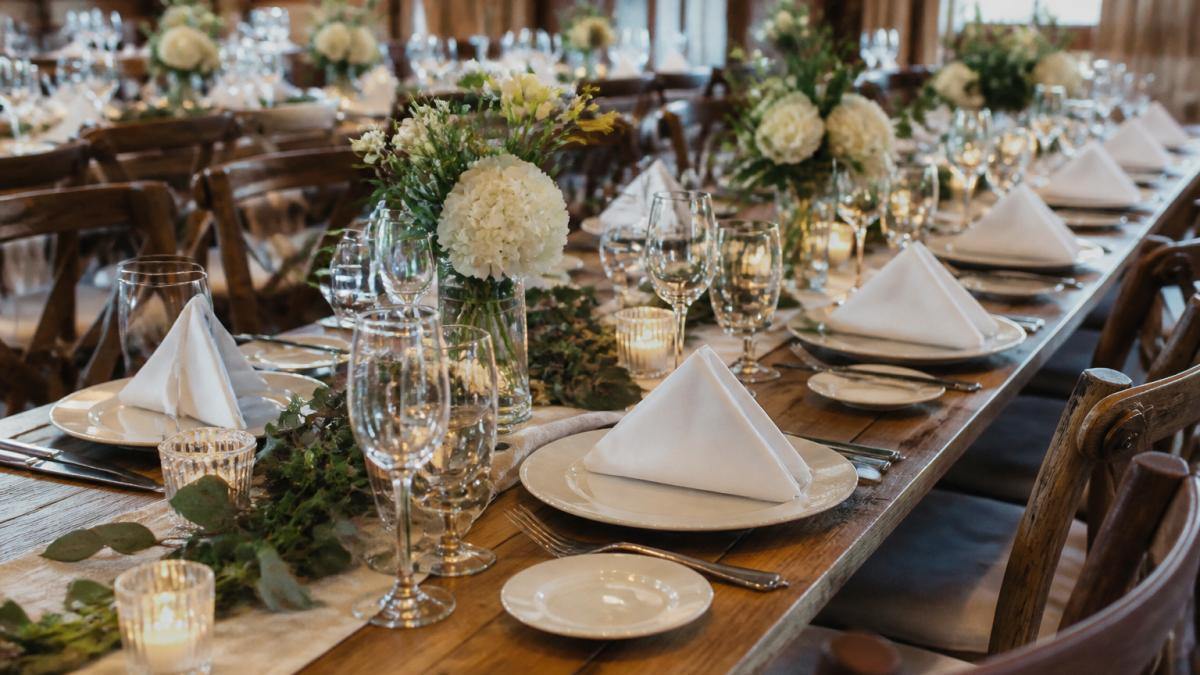
Your table setting communicates care. Follow this order from outside to inside: water glass, wine glass, salad fork, dinner fork, plate, knife, spoon.
Plan guest flow from entry to appetizer area to dining table, avoiding bottlenecks and creating clear pathways for serving and clearing.
Dinner Party Etiquette for Hosts
Your role as host is to make guests feel welcome and comfortable, which means managing your own stress so you can focus on them.
Greet each guest personally, make introductions between people who don't know each other, then step back to let guests mingle.
Handle mishaps with grace: food burns? Order backup pizza. Guest cancels? Adjust quantities. Wine spills? Laugh it off. Your calm sets the tone.
Keep Your Kitchen Organized and Stress-Free
Your kitchen is command central during a large dinner. Organization here prevents the event from falling apart.
Set up zones before you cook
Divide your kitchen into three working zones and keep them separate all day:
- Prep zone: cutting boards, knives, bowls, and ingredients for the dishes you're making now.
- Cooking zone: stove, oven, and the tools you need at the heat source.
- Plating and staging zone: platters, serving spoons, and a clear counter where finished dishes wait to go out.
Clean as you go. Wash dishes and wipe counters between cooking tasks to prevent clutter and overwhelm. Keep backup supplies visible: extra napkins, serving spoons, clean plates, trash bags.
Oven and stovetop timing math
A large dinner usually means more dishes than burners. Plan the cook order before you turn anything on.
- Group dishes by cooking temperature, if two want 350°F, cook them together and adjust time for the larger mass.
- A standard home oven holds two to three 9x13-inch pans on one rack, or one large roasting pan plus one sheet pan. Don't stack pans on the same rack, airflow matters.
- A standard stovetop has four burners. If you need more, use a slow cooker, electric roaster, or countertop induction burner.
Holding food safely while you finish cooking
Food that finishes early needs a safe place to wait.
- Keep hot foods at 140°F or above. Use a slow cooker, chafing dish, warming drawer, or a low oven (around 170°F) to hold dishes.
- Keep cold foods at 40°F or below. Use the refrigerator, a cooler with ice, or an ice bath for salads and cold sides.
- The danger zone is between 40°F and 140°F. Don't leave perishable food in that range for more than two hours (one hour if the room is above 90°F).
Delegate with a simple task list
If you have help, assign specific jobs rather than asking for general help, vague offers turn into people standing in the doorway.
- Beverage lead: keeps water glasses filled, opens wine, restocks the cooler.
- Appetizer lead: replenishes platters and clears empty ones.
- Plate and clear lead: collects used plates between courses.
Write the assignments on a card and hand them out when helpers arrive.
Contingency planning for the kitchen
A short list of backups keeps a small problem from becoming a ruined dinner:
- Oven dies: move what you can to a slow cooker, stovetop, grill, or countertop roaster; reheat the rest in batches.
- Power goes out: keep a cooler and ice for cold items, and a camp stove or grill for hot items.
- A dish is running late: serve the next course on time and hold the late dish as an extra.
At Pyke's Crossroads Restaurant, we've learned the secret to stress-free hosting is preparation. When you've planned thoroughly and organized your space, the event becomes enjoyable. You're not scrambling, you're present with your guests.
Frequently Asked Questions
How far in advance should you plan a large group dinner?
Begin planning 4-6 weeks ahead for a group of 20 or more. This timeline allows you to confirm your headcount, finalize your menu, arrange your dining space, and complete most prep work. For groups of 30+, start 8 weeks out. A large dinner party timeline ensures you're not scrambling last-minute and gives guests adequate notice for their RSVP.
What food is easiest to serve at a large dinner party?
Make-ahead dishes like casseroles, braises, pasta dishes, and slow-cooker meals are ideal because they hold quality and free up your time on the day of the event. Appetizers that can be prepped and plated ahead, sides that don't require last-minute finishing, and desserts made the day before also reduce stress. Avoid dishes requiring split-second timing or last-minute plating for large group dinner menu ideas.
How do you accommodate dietary restrictions at a group dinner?
Ask guests about allergies and preferences when you send invitations, include a simple RSVP form with checkboxes for common restrictions like vegetarian, gluten-free, nut allergies, and dairy-free. Plan your menu with at least one substantial vegetarian option and one protein option. Keep dietary items separate during prep to prevent cross-contact, and label serving dishes clearly. For severe allergies, prepare dedicated utensils and serving areas.
What are some good etiquette tips for hosting a dinner party?
Greet guests warmly as they arrive and introduce people who don't know each other. Seat guests strategically to encourage conversation and avoid long silences. Stay present and attentive without hovering, check in on comfort without interrupting. Serve beverages promptly, pace courses appropriately, and ensure everyone has finished before clearing plates. Dinner party etiquette for hosts means making guests feel valued and comfortable throughout the event.