 how-to
Craft Beer Flights: Tips for Choosing the Perfect Sampler
Table of Contents
- Why Craft Beer Flights Beat Committing to a Full Pour
- Beer Flight Order of Operations: Light to Heavy, With Exceptions
- How to Taste Craft Beer: A Step-by-Step Sensory Guide
- Best Beer Styles for a Flight: Building a Balanced Sampler
- Flight Size, Pour Volume, and Responsible Pacing
- A Practical Flight-Building Framework: The Four-Sip Method
- Common Flight-Order and Tasting Mistakes to Avoid
- Frequently Asked Questions
Last Updated: October 17, 2026
Why Craft Beer Flights Beat Committing to a Full Pour
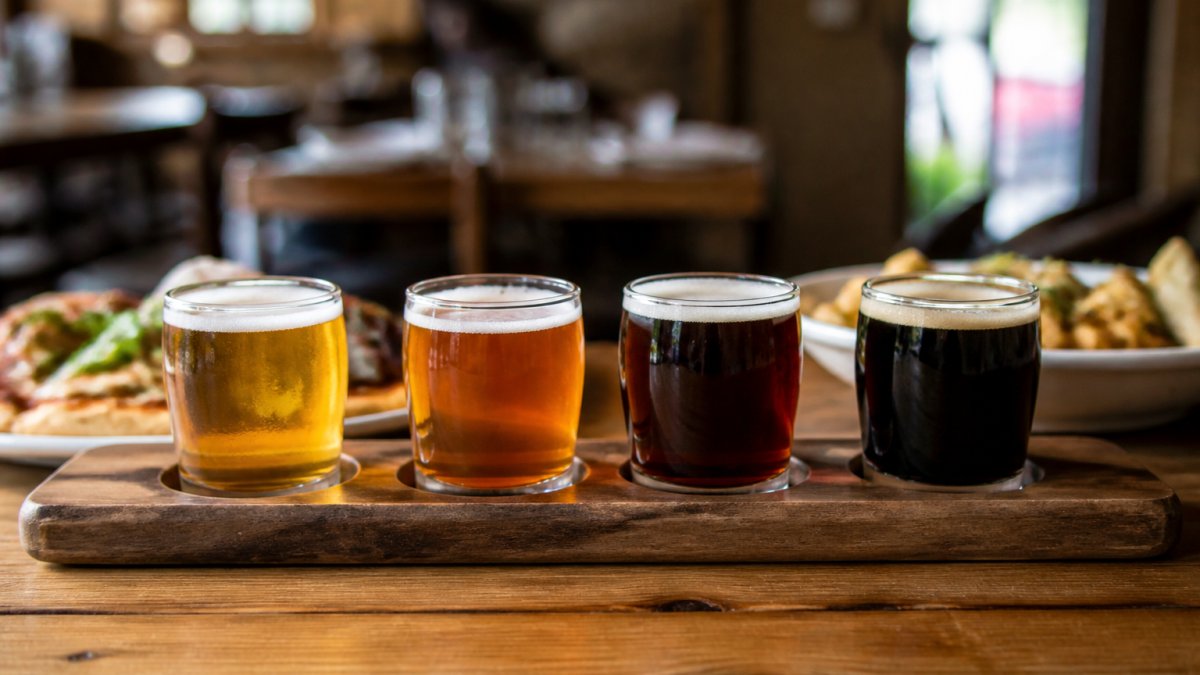
Craft beer flights are sets of small sample pours served together so you can compare several beers side by side. At Pyke's Crossroads Restaurant, we pour flights from our 60-plus beer list and our 9 rotating taps, and we watch guests discover favorites they never would have ordered by the pint. That is the whole point: a flight lets you taste before you commit.
Ordering a full pour of an unknown beer is a gamble. Sometimes you win. Often you nurse a stout you did not want for an hour.
A flight removes that risk. You get four or five small pours, and you learn something with each sip.
The Case for Sampling Before You Commit
Three things happen when you sample instead of commit:
- You find styles you would never have ordered blind.
- You waste less beer and less money on a miss.
- You learn how your palate responds to hops, malt, and roast.
The last one matters most. Most people think they dislike a whole category, then discover they only dislike one version of it.
Beer Flight Order of Operations: Light to Heavy, With Exceptions
The standard beer flight order of operations runs light to heavy: start with the lightest lager or wheat beer, move through pale ales and IPAs, then finish with porters, stouts, and sours. This protects your palate from big flavors early, so subtle beers still register.
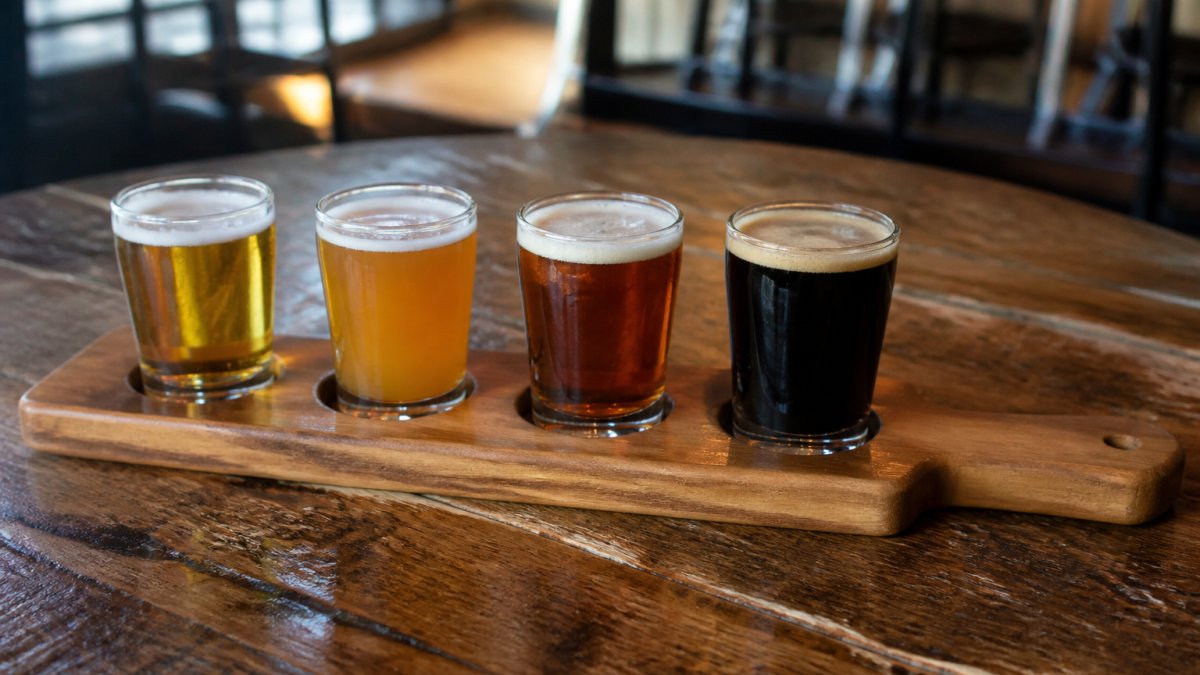
Here is the order we recommend for a four-beer flight:
- Light lager or pilsner - crisp, low bitterness, clean finish
- Wheat beer or pale ale - soft malt, gentle hop character
- IPA or pale ale with more hops - bitterness climbs here
- Stout, porter, or barrel-aged beer - roasted malt, high body
The logic is simple. Big, roasty, or hoppy beers coat your palate. Taste them first and everything after tastes thin.
When to Break the Rules
Order is a tool, not a law. Three cases where we would reorder:
- Sour beer first. Sour beer is acidic and sharp. Put it at the front or it will taste harsh after a stout.
- High-ABV beers last. A strong ale at 9% ABV will dull your palate fast. Save it for the end.
- Smoked or barrel-aged beers last. These flavors linger. Nothing tastes right after them.
If you are unsure, ask the bartender. They know which keg is freshest and which beer is the palate-killer on the board.
How to Taste Craft Beer: A Step-by-Step Sensory Guide
Learning how to taste craft beer comes down to five checks: appearance, aroma, flavor, mouthfeel, and finish.
Appearance. Hold the glass to the light against a white background. Note the color (straw, amber, copper, brown, black), clarity (bright, hazy, opaque), and head (fine, coarse, lingering, fading).
Aroma. Swirl the glass to release volatiles, then smell twice: once short and once long.
Flavor. Take a small sip and let it sit on your tongue. Ask three questions: how bitter is it, how sweet is it, and how heavy is the body?
Mouthfeel. Notice carbonation (soft, prickly, sharp), body (thin, medium, full), warmth from alcohol, and any astringency or creaminess. Mouthfeel is where a 4% pilsner and a 9% imperial stout separate even when their flavors overlap.
Finish. Swallow and wait ten seconds. The finish tells you more than the first sip. A clean finish fades fast. A long, bitter finish sticks around. A sweet finish can turn cloying.
Take notes on your phone if you want to remember what you liked. A simple scorecard works better than memory because it forces you to rate each sample on the same terms:
| What to Check | What to Note | Score (1-5) | Why It Matters |
|---|---|---|---|
| Appearance | Color, clarity, head | Signals style and freshness | |
| Aroma | Malt, hops, yeast, off-notes | Predicts flavor before you sip | |
| Flavor | Bitterness, sweetness, balance | Tells you if you want a full pour | |
| Mouthfeel | Carbonation, body, warmth | Separates similar-tasting styles | |
| Finish | Length, aftertaste | Reveals quality and balance | |
| Overall | Would you order a full pour? | Turns tasting into a decision |
Score each row from 1 (poor) to 5 (excellent), then total the five sensory rows for a score out of 25. Anything at 18 or above is usually worth a full pour.
Best Beer Styles for a Flight: Building a Balanced Sampler
The best beer styles for a flight are ones that share a thread but differ enough to compare. A good lineup teaches you something. A random lineup just gets you tipsy.
Build around contrast or kinship. Pick one:
- Contrast flight: lager, IPA, stout, sour. Wide range, big differences.
- Kinship flight: three IPAs from different breweries or hop bills. Same style, small differences.
Contrast is better for beginners. Kinship is better once you know what you like.
Matching Styles to Your Palate
Start with what you already drink, then move one step away.
- If you drink light beer: start with pilsner, then wheat, then pale ale.
- If you drink coffee: go straight for porter and stout.
- If you like citrus or pine: hop-forward beers are your lane.
- If you like wine or cider: try a sour or a saison.
One rule we follow: never build a flight of four IPAs if you are new to craft beer. Palate fatigue sets in by the third pour. You stop tasting the differences.
Flight Size, Pour Volume, and Responsible Pacing
Most flights run four to six sample pours of roughly 4 to 5 ounces each. That is enough to evaluate a beer without overdoing it, but the total matters more than the pour size.
Use this quick estimate before you order: multiply total ounces by ABV as a decimal to get approximate alcohol ounces. A standard 12-ounce beer at 5% ABV is about 0.6 alcohol ounces (What Is A Standard Drink?).
Three habits keep a tasting on track:
- Order water with the flight. Mineral water cleans your palate between pours. Take a sip of water and a bite of food between each sample, not just at the end.
- Eat something salty and starchy. Pretzels, fries, or salty snacks reset your taste buds and slow the pace of drinking.
- Share the flight. Splitting a flight with someone else halves the intake and doubles the opinions.
Pace the flight over 45 to 60 minutes rather than 15. A practical rhythm is one sample every 8 to 10 minutes: smell, sip, score, then water and food before the next pour. That pace gives your palate time to reset and keeps the alcohol from stacking up faster than you notice.
If you plan to drive, keep the flight small and stop early. Alcohol content adds up faster than most people expect, especially with high-ABV styles at the end of the lineup. Choose a designated driver, use a rideshare, or plan to stay within walking distance before the first pour arrives.
A Practical Flight-Building Framework: The Four-Sip Method
Here is the framework we use when we help guests build a flight. We call it the Four-Sip Method, and it takes about two minutes to run.
Step 1: Pick your anchor. Choose one beer you already know you like. This is your baseline.
Step 2: Pick one contrast. Add a beer from the opposite end of the spectrum. Light to dark, or hoppy to malty.
Step 3: Pick one wildcard. Choose a style you have never tried. Sour, saison, or something local.
Step 4: Pick one crowd-pleaser. Finish with something safe and balanced that you know you will enjoy.
Then order them light to heavy, with the exceptions above. That is it. Four pours, four jobs, no wasted beer.
Common Flight-Order and Tasting Mistakes to Avoid
The biggest flight mistake is ordering by price or popularity instead of by style. That gives you a lineup with no logic, and you learn nothing.
Here is what we see most often:
- Starting with the hoppiest beer. Bitterness kills your palate for everything after.
- Skipping the smell. Aroma carries most of what you taste. Skip it and you miss half the beer.
- Drinking too fast. Small pours go down quick. Slow down and take notes.
- Ignoring the finish. The aftertaste tells you if a beer is balanced.
- Building a flight of five big beers. Palate fatigue makes the last two pours pointless.
One more: do not assume you dislike a style because you disliked one beer. Brewing methods and ingredients vary wildly between breweries. Try two or three versions before you write off a whole category.
At Pyke's Crossroads Restaurant, our 95% scratch kitchen and wood-fired pizzas pair well with a tasting flight, and our team is glad to walk you through the tap list. Ask us what is fresh, what is local, and what to try first.
Frequently Asked Questions
How should you drink a flight of beer?
Start with the lightest, least intense beer and work toward the darkest or most bitter. Take a small sip, let it coat your palate, and note the aroma before tasting. Use water or a plain cracker between samples to reset your palate. Craft beer flights are designed for comparison, so pace yourself and avoid rushing through the pours. If a beer tastes off after a hoppy IPA, cleanse with mineral water before the next sip.
How many ounces are typically in a single beer flight glass?
Most craft beer flights use 4-ounce to 5-ounce sample pours, though some taprooms serve 3-ounce tasters for high-ABV styles. A standard flight of four samples totals roughly 16 to 20 ounces, about the same as one full pint. Ask your server about pour volume before ordering, especially if you plan to share or want to try more styles without overdoing it.
Should I choose beers by style or by brewery when building a flight?
Choose by style first if you want to learn how different brewing methods affect flavor, such as comparing a pale ale to a stout. Choose by brewery if you want to explore one producer's range and consistency. Many taprooms offer themed flights that combine both approaches. For a balanced sampler, pick two contrasting styles and two from the same brewery to compare technique side by side.
What are the best palate cleansers between beer samples?
Plain mineral water and unsalted crackers are the most effective palate cleansers between craft beer samples. Avoid strongly flavored snacks like spicy pretzels or heavily seasoned fries, which can mask subtle flavors. A bite of plain bread or a sip of sparkling water removes lingering bitterness and roasted malt notes. If you are ordering food, salty foods like fries pair well but should be eaten after evaluating each sample.
Building a flight is easy. Building one that actually teaches you something takes a little thought. That is where we come in.
At Pyke's Crossroads Restaurant, we pour flights from an extensive list of Texas-made craft brews, with 9 rotating taps and staff who know the board. Pair your sampler with a wood-fired pizza from our scratch kitchen and live music from local artists.
Stop by and let us build your next flight.