 Ultimate guide
A Local Texas Craft Beer Selection Guide
Last Updated: October 29, 2026
Quick Summary
A local texas craft beer selection is best explored through flights of four to six small pours, ordered lightest to darkest so hops and roasted malt don't overwhelm delicate styles. At Pyke's Crossroads Restaurant we pour from more than 60 beers with a focus on Texas-made brews across 9 rotating taps.
- Order flights lightest to darkest, starting with crisp lagers or pale ales and finishing on stout or porter.
- Treat IBU as one data point, since a malty stout at 50 IBU can drink smoother than a dry IPA at 45.
- Pair light lagers with margherita pies, hop-forward IPAs with spicy sausage, and dark stouts with smoky toppings.
- Read a taproom menu in four passes: ABV, hop description, malt profile, and tasting notes.
- Ask for a one- to two-ounce sample before committing to a full glass.
Table of Contents
- What Makes a Local Texas Craft Beer Selection Worth Your Time
- Tips for Choosing Craft Beer Flights That Fit Your Palate
- Understanding Craft Beer Bitterness and What IBU Really Tells You
- How to Pair Craft Beer With Wood-Fired Pizza
- Reading a Taproom Menu: ABV, Hops, Malt Profile, and Tasting Notes
- Beyond the Pint: Non-Alcoholic Craft Options and Sustainable Brewing
- Plan Your Texas Craft Beer Tasting at Pyke's Crossroads
- Frequently Asked Questions
What Makes a Local Texas Craft Beer Selection Worth Your Time
Texas craft beer earns its following because independent brewers here build flavor around regional ingredients and local water profiles, not national focus-group data. At Pyke's Crossroads Restaurant, we pour from a list of more than 60 beers with a focus on Texas-made brews, and that focus shapes how we guide guests through a local Texas craft beer selection. If you want to explore further, see Texas craft beer bars worth the drive.
Independent Brewers, Regional Specialties, and the Craft Scene
Independent brewers are small production houses that control their own recipes, fermentation schedules, and distribution. That independence matters: a microbrewery selling only within its region can rotate seasonal brews faster and take risks a national brand cannot.
A common mistake is judging a taproom by tap count alone. A short, well-curated list often beats a wall of handles. What most guides miss is that a craft scene's real health shows in how often the taps rotate, not how many exist.
Tips for Choosing Craft Beer Flights That Fit Your Palate
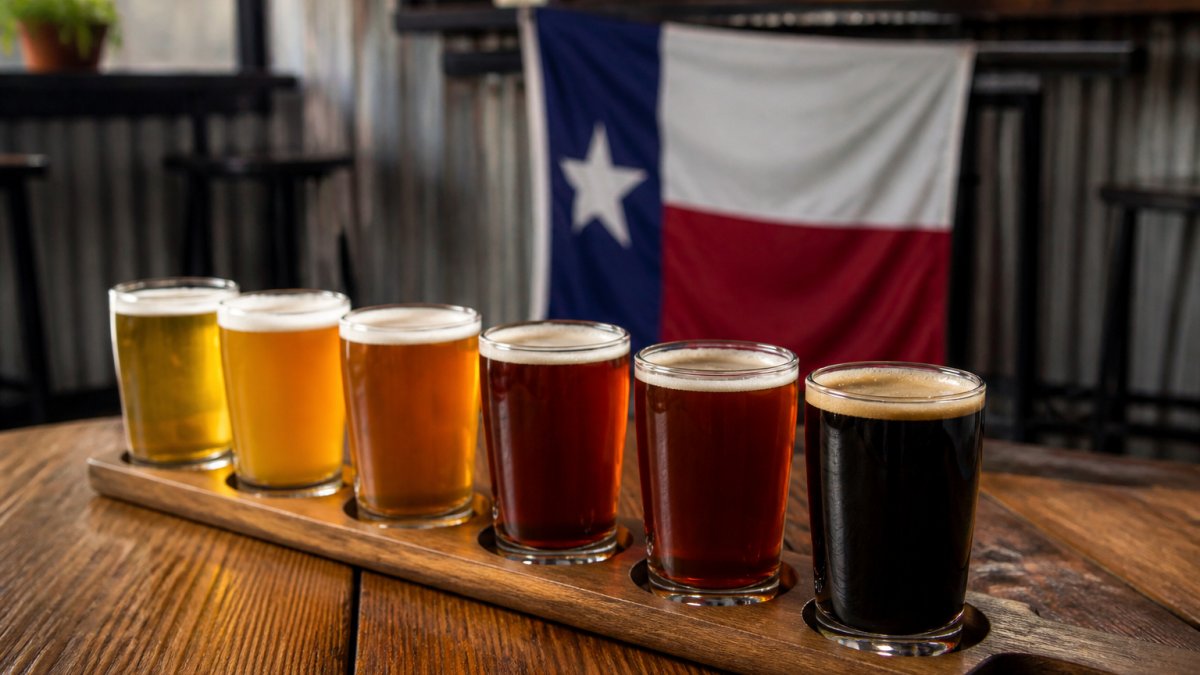
A beer flight is a small set of tasting pours, usually four to six glasses, arranged so you can compare styles side by side. For deeper guidance, see tips for choosing the perfect sampler. Order lightest to darkest and you taste every sample at its best.
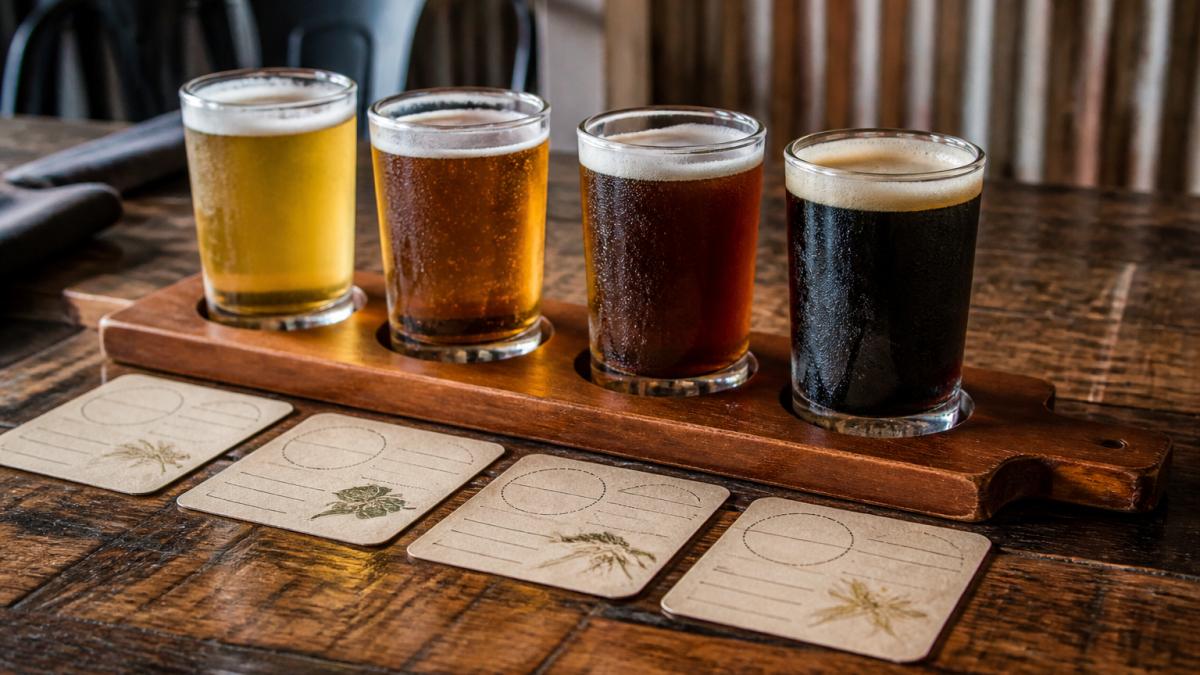
Building a Flight Order From Light to Dark
Start with a crisp lager or pale ale, then move through amber ales, IPAs, and finish on a stout or porter. Why this order? Hops and roasted malt coat the palate; once you taste a barrel-aged stout, a delicate pilsner tastes like water. Ask your server which pours are on-tap that day, and note the ABV before you commit to a strong finish.
Understanding Craft Beer Bitterness and What IBU Really Tells You
IBU, or International Bitterness Units, measures the concentration of isomerized hop compounds in a beer (International Bitterness Units (IBUs) | The Oxford Companion to Beer). It tells you how bitter a beer is on paper, not how bitter it will taste to you. A malty stout at 50 IBU can drink smoother than a dry IPA at 45 because residual sweetness balances the hops.
How to Pair Craft Beer With Wood-Fired Pizza
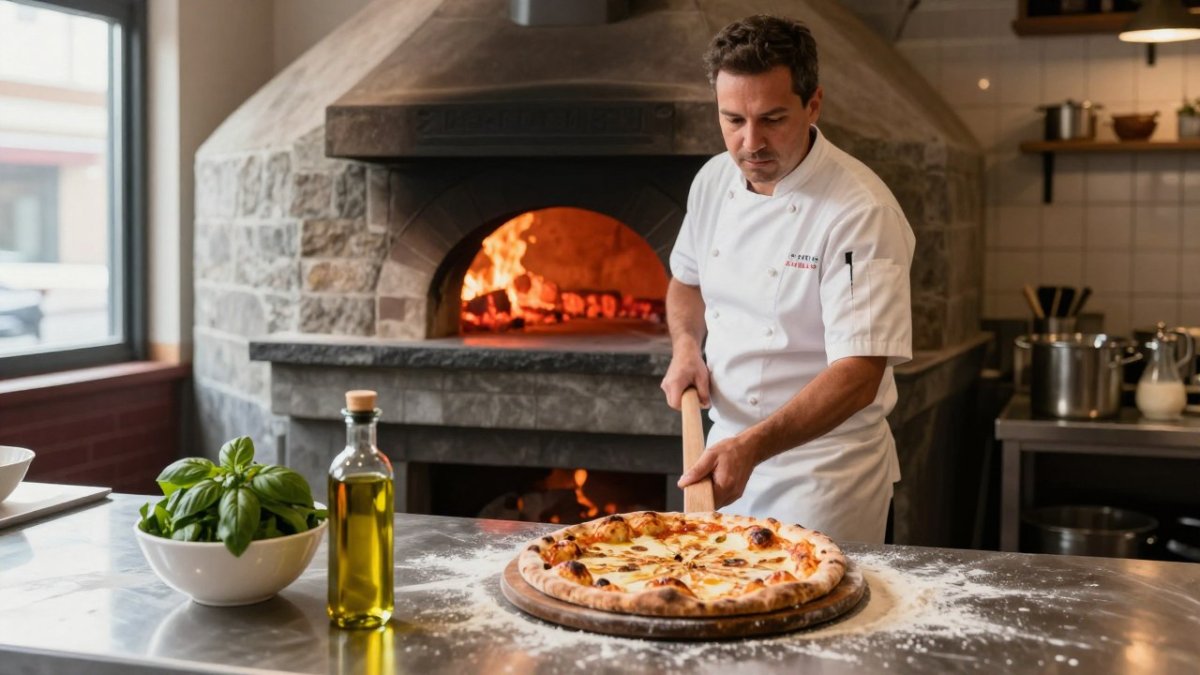
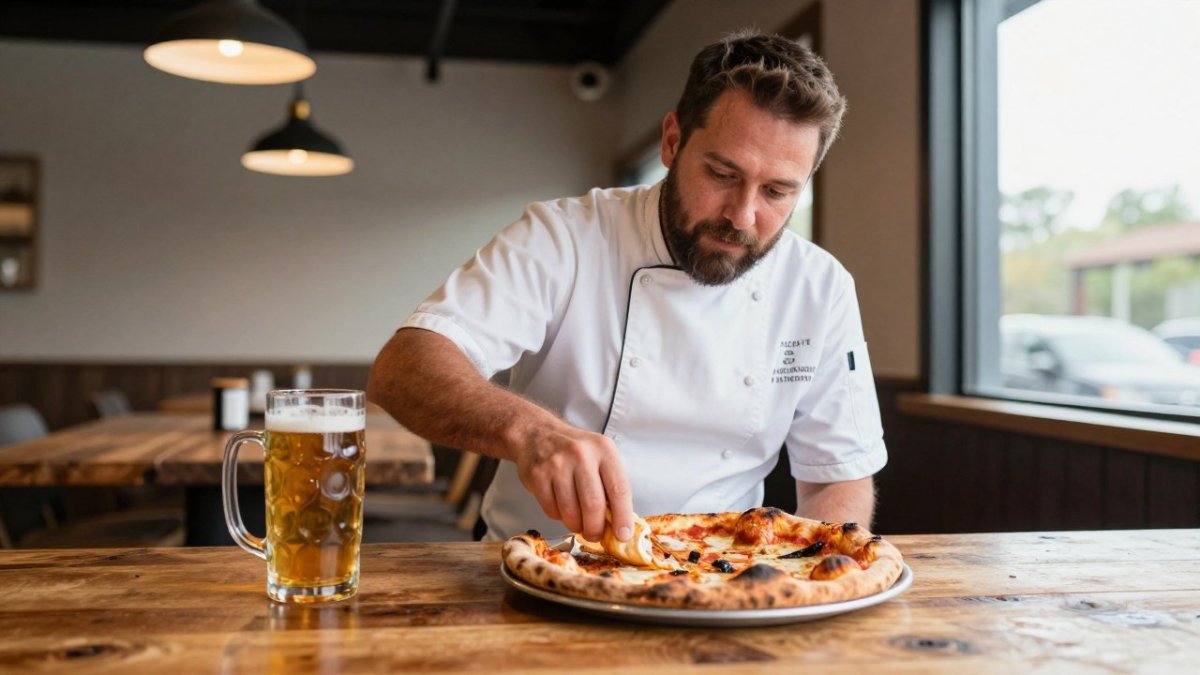
Pair craft beer with wood-fired pizza by matching intensity to intensity: light lagers with fresh margherita pies, hop-forward IPAs with spicy sausage, and dark stouts with smoky or mushroom toppings. To try these pairings out, browse wood-fired pizza spots in Winnsboro, Texas.
A beer pairing rule we rely on: if the topping has heat, pick a beer with enough malt backbone to cool it down. Hops amplify spice; sweetness tames it.
Reading a Taproom Menu: ABV, Hops, Malt Profile, and Tasting Notes
A taproom menu is a technical document disguised as a poem. Read it in four passes, ABV, hop description, malt profile, and tasting notes, and you can predict how a pour will drink before it reaches your hand. A tasting room menu that lists all four is written by people who respect your palate; one that lists only style names and ABV is hiding the details that decide whether you will enjoy the glass.
ABV: The First Number That Changes Your Order
ABV (alcohol by volume) is the percentage of ethanol in the finished beer. It sets sessionability more than any other figure on the menu. As a working rule most taproom staff use:
- Under 4.5% ABV, session territory. Two or three pours across an evening stay comfortable, and the beer rarely overwhelms food.
- 4.5% to 6.5% ABV, the standard range for pale ales, amber ales, and most lagers. One or two full pours is a typical pace.
- 6.5% to 9% ABV, IPA and strong-ale territory. These reward a smaller pour or a shared glass.
A flight of four 9% beers delivers roughly the alcohol of three full pints. That math is why flight order matters as much as flight selection.
Hops: Bitterness Versus Aroma
Hop descriptions on a menu usually signal two different things, and conflating them is the most common reading mistake:
- Bittering additions, hops added early in the boil. They contribute IBU and a firm, drying finish. Words like "resinous," "piney," and "assertively bitter" point here.
- Aroma and dry-hop additions, hops added late or after fermentation. They contribute smell, not much bitterness. Words like "citrus-forward," "tropical," "floral," and "dank" point here.
A menu that says "dry-hopped with Citra and Mosaic" is telling you the beer will smell juicy and may drink softer than its IBU suggests. A menu that says "triple-hopped" with no variety names is telling you almost nothing.
Malt Profile: Where Body and Sweetness Live
Malt profile describes the grain bill and what it does to the beer's body and color:
- Base malt (pale, pilsner, two-row) supplies fermentable sugar and the backbone (base malt | The Oxford Companion to Beer).
- Specialty malt (crystal, Munich, chocolate, roasted barley) supplies color, caramel or toast notes, and residual sweetness.
- Adjuncts (corn, rice, oats, wheat) lighten body or add creaminess depending on the grain.
A menu that names its malt bill, "Maris Otter base with crystal 60 and a touch of roasted barley", is telling you the beer will have caramel sweetness and a dry, coffee-tinged finish. A menu that says only "stout" is telling you the color.
Tasting Notes: The Brewer's Intent, Not a Guarantee
Tasting notes are the brewer's description of what they were aiming for. Treat them as a map, not a contract. "Notes of stone fruit and white pepper" means the brewer detected those characters in their own tasting; your palate may find peach, or nothing at all. The useful move is to compare the tasting notes against the hop and malt descriptions, if the notes mention citrus and the hops are Citra, the description is internally consistent and probably accurate.
Red Flags on a Taproom Menu
- Style name and ABV only. No hop, malt, or tasting detail means the menu was built for speed, not for you.
- No pour sizes listed. A taproom that offers only one size for a 12% barrel-aged stout is not thinking about how you will drink it.
- No rotation date. A menu with no "keg tapped" or "last updated" note may be pouring beer that has been on tap for weeks.
Taproom staff use ABV bands as a working rule for pacing an evening, so here is how the ranges break down.
| ABV range | Typical styles | How to pace it |
|---|---|---|
| Under 4.5% | Session territory | Two or three pours stay comfortable |
| 4.5% to 6.5% | Pale ales, amber ales, most lagers | One or two full pours is typical |
| 6.5% to 9% | IPA and strong-ale territory | Reward a smaller pour or shared glass |
| Above 9% | Barrel-aged stouts, barleywines, imperial anything | Treat as a finish, not a start |
Beyond the Pint: Non-Alcoholic Craft Options and Sustainable Brewing
Two shifts are reshaping how independent taprooms build a list: the rise of non-alcoholic craft beer and the spread of sustainable brewing practices.
Non-Alcoholic Craft Beer: How It Is Made and How to Order It
Non-alcoholic (NA) craft beer is produced through several methods, and each leaves a different fingerprint on the finished glass:
- Arrested fermentation, the brewer stops fermentation before alcohol develops, usually by chilling the wort or removing yeast early. The result tends to keep more residual sweetness and a fuller body, but the malt character can taste less developed.
- Vacuum distillation, the finished beer is heated under low pressure so alcohol evaporates at a lower temperature than it would at sea level. This preserves more hop aroma than conventional distillation, but the process can strip some volatile compounds and leave the beer tasting slightly thinner.
- Reverse osmosis, the beer is pushed through a membrane that separates alcohol from the rest of the liquid, and the brewer blends the dealcoholized portion back with a small amount of the original for flavor. This is the route most often used for NA versions of hop-forward styles because it retains aroma better than heat-based methods.
Sustainable Brewing: What to Ask and What the Answers Mean
Sustainability in brewing is not a single practice, it is a set of trade-offs, and the questions you ask reveal how seriously a brewery treats them:
- Water reclamation. Brewing is water-intensive; a typical pint takes several pints of water to produce. Breweries that reclaim and reuse process water cut that ratio, but the equipment is expensive and the savings take years to realize. Ask whether the brewery treats its own wastewater or sends it to the municipal system.
- Spent grain. After mashing, the leftover grain is still nutritious. Breweries that donate it to local farms or bakeries keep it out of landfills; breweries that compost it do the same with more infrastructure. Ask where the grain goes.
- Carbon capture during fermentation. Fermentation releases carbon dioxide, and some breweries now capture it to carbonate other beers or to sell. The equipment is a capital expense most small producers cannot justify, so a brewery that has it is signaling long-term intent.
Why This Belongs in a Selection Guide
A local craft beer selection is not only a list of flavors, it is a set of choices about who the brewery serves and how it operates.
Plan Your Texas Craft Beer Tasting at Pyke's Crossroads
The best way to learn a local Texas craft beer selection is to taste through one with someone who knows the list. At Pyke's Crossroads Restaurant, our 9 rotating taps and more than 60 beers give you room to build a flight from light lager to barrel-aged stout in a single sitting. Our 95% scratch kitchen and wood-fired pizza ovens, imported from Italy, complement the beer list.
Frequently Asked Questions
What beer styles are most common in a local Texas craft beer selection?
Texas taprooms lean heavily on IPAs, pale ales, lagers, and stouts, with sours and barrel-aged releases showing up as limited offerings. You will also see seasonal brews built around regional ingredients and cask ale on occasion.
How do I choose a craft beer flight that suits my palate?
Start with what you already drink, then move one step outward. If you like light lagers, order a pilsner, a blonde ale, a wheat beer, and a pale ale. If you drink IPAs, try a hazy, a West Coast IPA, a double IPA, and a stout to compare hop-forward against malt-forward. Keep the flight to four 4-ounce pours, take tasting notes between sips, and ask your server which taps are freshest that week.
What does IBU mean on a craft beer menu?
IBU stands for International Bitterness Units, a measure of how much bitterness the hops contribute. A light lager sits around 10-20 IBU, a pale ale around 30-40, and a double IPA can climb past 70. IBU is not the same as perceived bitterness, though, because malt sweetness and alcohol balance it out. A 60 IBU stout can taste smoother than a 45 IBU IPA, so use IBU as a rough guide and let tasting notes fill in the rest.
What food pairs best with Texas craft beer?
Match intensity to intensity. A crisp lager or pilsner cuts through a wood-fired margherita, while an IPA stands up to spicy sausage or pepperoni. Malt-forward amber ales work with smoky or caramelized toppings, and a stout or porter pairs well with chocolate desserts or rich, roasted flavors.
Is there anything for non-beer drinkers at a craft beer restaurant?
Yes. Many taprooms now carry non-alcoholic craft alternatives, including NA IPAs, hop waters, and craft sodas, so guests who are not beer people still have options. At a scratch kitchen with a full menu, the food and live music carry the evening on their own. Ask your server which NA options are on hand that day, since these rotate more often than the core beer list.
How fresh is local craft beer compared to bottles from a store?
Draft beer poured at a taproom is usually weeks fresher than bottled beer that has traveled through distribution and sat on a shelf. Hops fade first, so an IPA on tap at a local brewery tastes brighter and more aromatic than the same style in a bottle. Ask when the keg was tapped.
Ready to put this guide to work? Building a flight that actually fits your palate takes practice, and the easiest place to start is a taproom with range. Pyke's Crossroads Restaurant offers 9 rotating taps, a Texas-focused beer list, and a scratch kitchen to pair it all with. Get started with Pyke's Crossroads Restaurant and find your next favorite pour.