 How-to
How to Identify Real Wood-Fired Pizza
Table of Contents
- Start With the Oven: What a Real Wood-Fired Setup Looks Like
- Wood-Fired Pizza Characteristics You Can Spot at the Table
- Wood-Fired Pizza Oven Temperature and the 90-Second Bake
- Wood-Fired Pizza vs Conventional Oven: What Changes on the Plate
- Wood-Fired Pizza Taste: Smoke, Char, and Ingredient Quality
- Reliable Signs vs Misleading Clues: What Appearance Alone Cannot Prove
- Wood-Fired, Wood-Flavored, or Hybrid: How to Tell Them Apart
- Conclusion
- Frequently Asked Questions
Last Updated: October 19, 2026
Start With the Oven: What a Real Wood-Fired Setup Looks Like
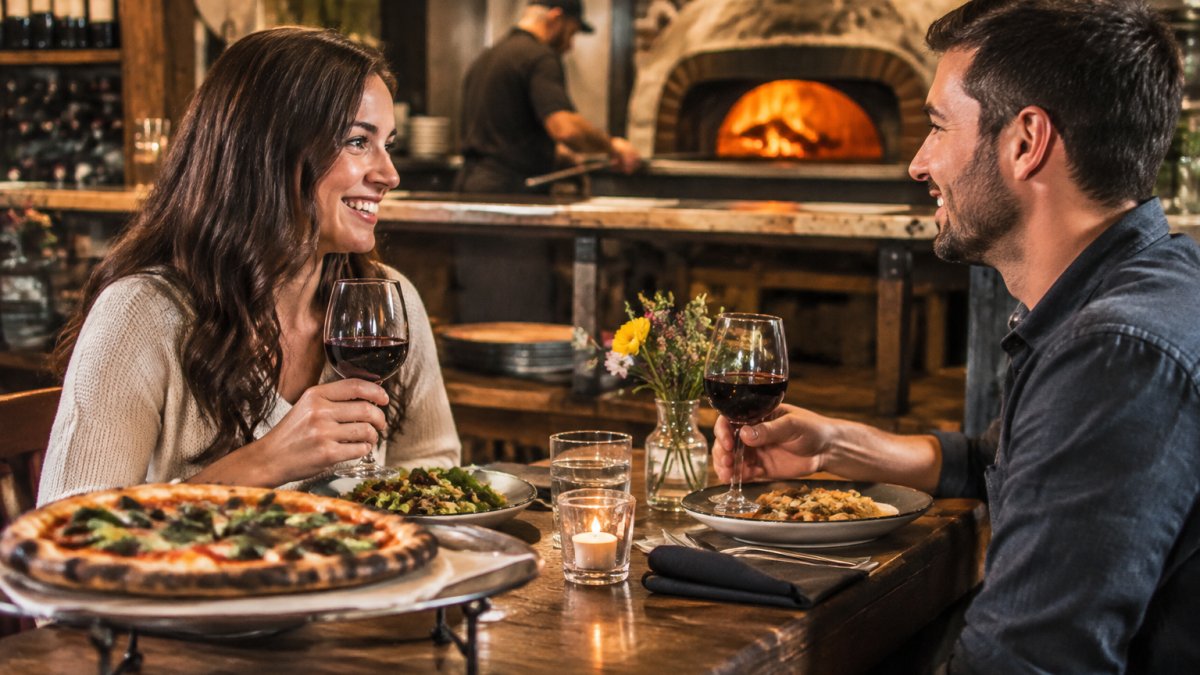
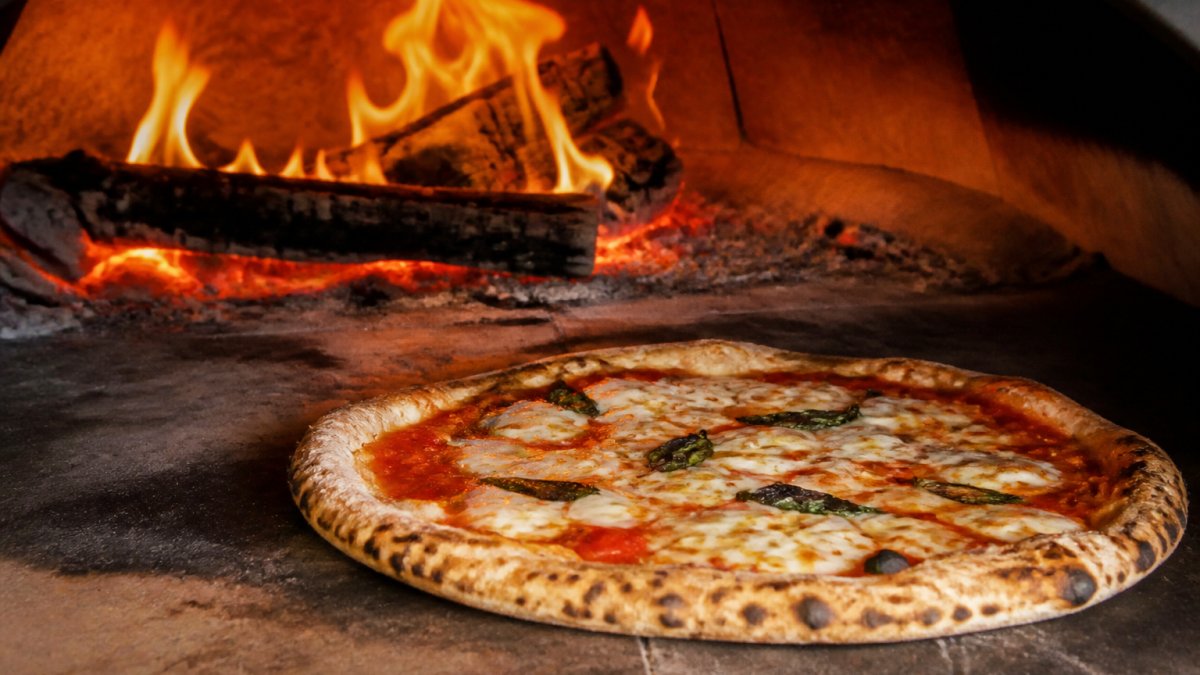
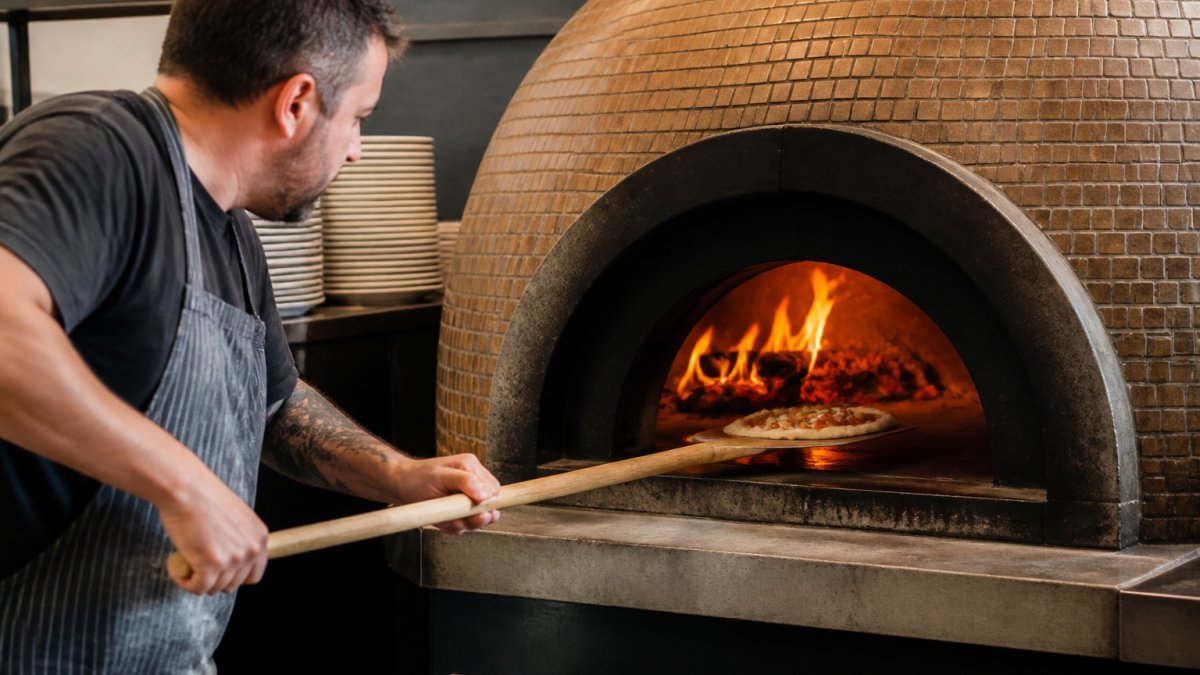
Real wood-fired pizza starts with the oven, not the toppings. A genuine wood-fired pizza oven burns hardwood inside a dome-shaped chamber, and the fire is visible when you walk in. If you can't see a fire, you're probably not looking at wood-fired cooking.
At Pyke's Crossroads Restaurant, we cook in wood-fired ovens imported from Italy, so we know what the real thing looks like. Here's how to spot it before you order.
The Dome, the Floor, and the Fire
A wood-fired oven has three parts you can check with your own eyes:
- The dome. A rounded brick or stone ceiling that traps heat and reflects it down onto the pizza.
- The floor. A flat stone surface, often dusted with flour, where the pizza sits directly on hot stone.
- The fire. Split hardwood logs burning at the back or side of the oven, with live flame you can see.
Many restaurants let you watch the kitchen. Ask to see the oven, or look for an open kitchen line. A gas deck oven or a conveyor oven looks nothing like this setup.
A Five-Step Oven Verification Checklist
Most guides stop at "look for a dome and a flame." That is a start, not proof. Use this sequence the next time you are deciding whether a pizzeria is really cooking over wood:
- Watch the load-in. Stand where you can see the mouth of the oven. A wood-fired pizza goes in on a long-handled peel and is turned by hand, usually with the fire banked to one side. If pizzas appear from a closed cabinet or a conveyor, the heat source is something else.
- Confirm live flame at the moment of baking. A fire that is lit only for show, or that has burned down to coals with no flame, is not doing the cooking. Look for flame while a pizza is actually in the chamber.
- Check the fuel supply. Split hardwood stacked within reach of the oven is the strongest physical clue. Ask what species they burn, oak, hickory, and pecan are common in American kitchens because they hold heat and burn cleanly. A kitchen that cannot name its wood is usually not feeding a fire.
- Look at the floor. A stone or brick deck, often dusted with flour or semolina, is where the pie sits. A metal deck or a screen under the pizza points to a different oven type.
- Ask two direct questions. "What fuel heats the oven?" and "How long does a pizza bake?" A wood-fired kitchen answers in seconds: hardwood, and roughly a minute to ninety seconds. Hesitation, or a bake time of eight to twelve minutes, tells you the oven is running cooler than a true wood-fired chamber.
What the Oven Alone Cannot Prove
A beautiful dome and a visible fire still do not guarantee that your particular pizza was cooked over wood. Some kitchens run a wood-burning oven for show or for a few specialty pies while the bulk of the menu comes out of a gas deck oven.
That is why the oven check is step one, not the whole test. Pair it with the crust evidence and the staff answers in the sections below before you draw a conclusion.
Wood-Fired Pizza Characteristics You Can Spot at the Table
The crust is your best clue. Real wood-fired pizza characteristics show up in the cornicione, the raised rim around the edge, and in the underside of the pie.
A wood-fired crust puffs up with air pockets. The rim looks blistered, with light char and dark spots rather than a uniform golden-brown color. The base stays thin and crisp, not thick and bready.
The Cornicione and the Underside
Pick up a slice and look at three things:
- The puffed rim. Air pockets and a hollow, airy texture inside the cornicione.
- The spots. Small black spots and golden-brown specks from direct flame contact, not a solid burnt ring.
- The underside. A dry, crisp base with floury patches, not a greasy or pale surface.
Uneven crust is normal and expected. A perfectly uniform edge often points to a different baking method.
Wood-Fired Pizza Oven Temperature and the 90-Second Bake
Wood-fired pizza oven temperature is the engine behind everything else.
That speed matters. A fast bake sets the crust before the toppings dry out, which is why the cheese stays soft and the tomato stays bright.
Ask your server how hot the oven runs and how long a pizza bakes. Staff at a real wood-fired kitchen usually answer without hesitating.
Wood-Fired Pizza vs Conventional Oven: What Changes on the Plate
Wood-fired pizza vs conventional oven cooking produces different results in four areas:
| Factor | Wood-Fired Oven | Conventional Oven |
|---|---|---|
| Cooking temperature | High heat, often 800-900°F | Typically around 500°F |
| Bake time | About 60-90 seconds | Several minutes |
| Crust texture | Puffed rim, crisp base, light char | Even browning, softer crust |
| Flavor | Subtle smokiness from hardwood | Clean, neutral flavor |
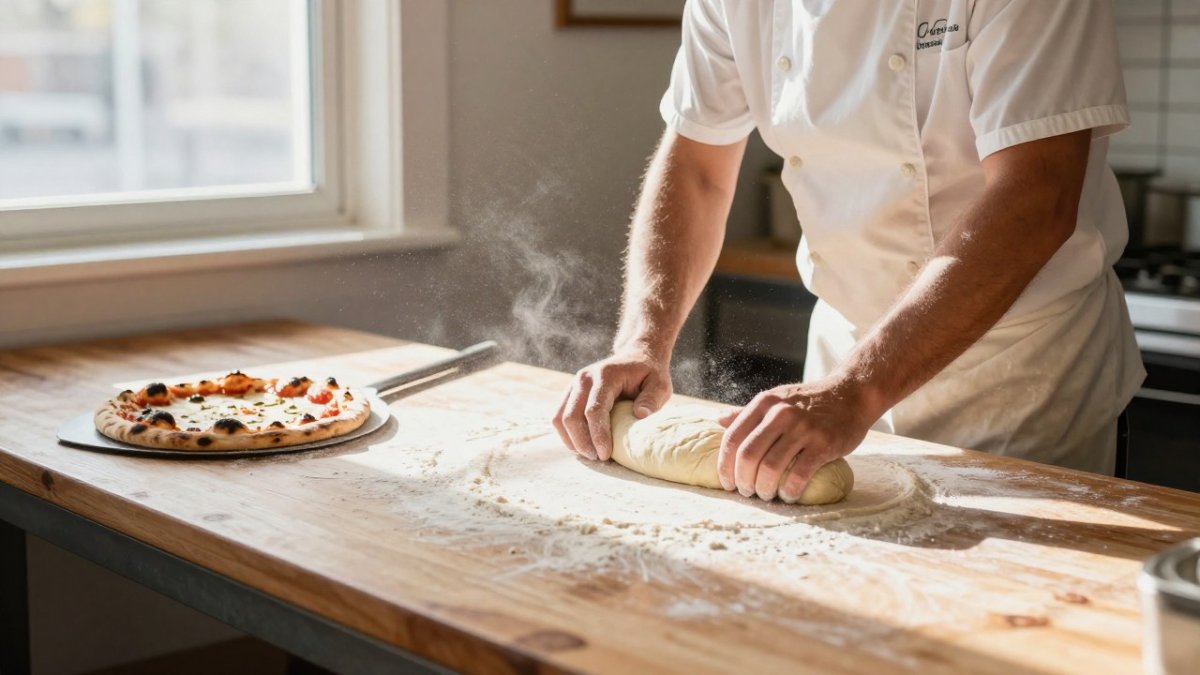
The biggest gap is crust texture. High heat drives a fast rise in the dough, so the cornicione puffs while the base crisps. A conventional oven heats more slowly, so the crust browns evenly and stays softer.
Wood-Fired Pizza Taste: Smoke, Char, and Ingredient Quality
Wood-fired pizza taste comes from three sources: smoke, char, and the ingredients.
The smokiness is subtle, a background flavor rather than a heavy campfire note. The char adds a light bitterness that balances the sweetness of tomato and cheese.
What most guides miss is that smoke can't rescue weak ingredients. A great wood-fired pie starts with good tomato, fresh cheese, and a dough that has had time to rest.
Reliable Signs vs Misleading Clues: What Appearance Alone Cannot Prove
Appearance alone cannot prove wood-fired cooking. Char, a puffed rim, and a rustic look can all be faked with a hot conventional oven, a broiler, or a finishing torch.
Reliable signs:
- A visible wood fire and a stack of split hardwood
- A dome-shaped oven with a stone floor
- A stated bake time under two minutes
Misleading clues:
- A charred rim with no fire in sight
- "Wood-fired" on the menu with no oven to show
- A dark crust on a pie that took ten minutes to arrive
If you want proof, ask. A kitchen that cooks with fire is usually proud to show it.
Wood-Fired, Wood-Flavored, or Hybrid: How to Tell Them Apart
"Wood-fired" and "wood-flavored" are not the same claim, and the difference is not semantic. It changes how the pizza cooks, how it tastes, and what you should expect to pay attention to on the plate.
The Three Cooking Methods, Defined
- Wood-fired. The pizza cooks by a combination of live flame and radiant heat inside a wood-burning oven. Hardwood is the primary heat source. The fire is visible, the deck is stone, and the bake is fast, commonly in the range of 60 to 90 seconds at 800 to 900 degrees Fahrenheit.
- Wood-flavored. The pizza cooks in a gas or electric oven, and wood smoke is introduced separately, through a smoke box, a smoking gun, a smoke-infused oil or salt, or a liquid smoke additive. The heat source is not wood. The smoke is a seasoning, not the engine.
- Hybrid. The oven burns gas as its main heat source and wood for flavor, or runs wood as primary heat with a gas assist to hold temperature. Some hybrid ovens are genuinely capable of good pizza; the point is that "hybrid" is a different claim from "wood-fired," and the kitchen should be willing to say so.
The One Question That Separates Them
Ask directly: "Is the pizza cooked by wood heat, or is wood used for smoke flavor?"
Then listen for the shape of the answer:
- A wood-fired kitchen says the fire is the heat source and names the wood.
- A wood-flavored kitchen usually says something like "we finish it with smoke" or "there's smoked mozzarella", which is a flavor choice, not a cooking method.
- A hybrid kitchen says both words: gas for heat, wood for flavor, or the reverse.
None of these answers is dishonest. The problem is only when a menu uses "wood-fired" as a mood word for a pizza that came out of a gas oven.
Why the Distinction Shows Up on the Plate
A true wood-fired bake drives a fast rise in the dough, so the cornicione puffs and the base crisps before the toppings dry out. A wood-flavored pizza cooked in a gas oven at conventional temperatures browns more evenly and stays softer, with smoke arriving as a top note rather than an integrated flavor.
That is why the taste test in the next section matters: if you control for crust style, toppings, and freshness, the cooking method is often the variable you can actually taste.
At Pyke's Crossroads Restaurant, our pizzas bake in Wood County's only wood-fired ovens imported from Italy, and you can see the fire when you walk in. Our 95% scratch kitchen makes the dough and sauces in-house, and we pour from more than 60 beers with a focus on Texas-made craft brews.
Conclusion
Spotting real wood-fired pizza comes down to the oven, the bake time, and the crust, not the menu wording. Use the checklist above on your next night out, and ask the kitchen directly when you're unsure.
If you want to see the real thing, visit Pyke's Crossroads Restaurant. Our Italian wood-fired ovens, scratch-made kitchen, and rotating taps of Texas craft beer make for a night worth the drive.
Frequently Asked Questions
How can you tell if pizza is really wood-fired?
Look past the crust and check the setup. A real wood-fired pizza comes out of a visible dome oven with a live fire, usually within 60 to 90 seconds. The crust should have a puffed cornicione, a crisp base, and a mix of golden-brown specks and light char rather than an even, uniform brown. Ask what fuel the oven burns and whether every pizza goes in that oven. If the answers are vague or the pies arrive in 12 minutes, treat the label with suspicion.
Does wood-fired pizza taste different from regular pizza?
Yes, but the difference is subtle rather than dramatic. The high heat and short bake time give the crust a lighter, airier interior and a crisp base, and the live flame adds a faint smoky background flavor. You should not taste a heavy campfire note. What usually stands out most is the crust texture and the brightness of the tomato and cheese, because the short bake does not dry out the toppings the way a longer conventional oven bake can.
Should wood-fired pizza have charred spots?
Some char is normal and expected, but it should be light. Look for small black spots and golden-brown specks on the cornicione and the underside, not large burnt patches or a uniformly blackened rim. Uneven spotting is actually a good sign, since it shows the pizza sat close to a live flame and was turned by hand. Heavy, bitter char usually means the oven floor was too hot or the pie was left in too long.
Does a wood-fired pizza restaurant cook every pizza in the wood oven?
Not always, and this is one of the most common gaps between marketing and reality. Some kitchens run a wood oven for show and a conventional gas or electric oven for volume. Ask directly whether every pizza on the menu goes into the wood oven, and watch the pass if you can see it. A steady stream of pizzas emerging from the same dome oven in under two minutes each is a strong sign the wood oven is doing the real work.
Want a fair taste test? Order the same simple pie, a Margherita, at two places and compare the crust first, then the smoke. The oven tells the truth.