 How-to
What Defines Authentic Neapolitan Pizza Crust
Last Updated: November 11, 2026
Quick Summary
Authentic neapolitan pizza crust has a raised, airy rim called the cornicione around a thin, soft center. It is defined by its shape, its tender, chewy texture, and a fast, high-heat bake that produces dark leopard spotting.
- Look for a raised, airy cornicione with a soft, pillowy texture
- The center should be thin and bend easily without cracking
- Leopard spotting comes from fast baking at high heat
- Char alone does not prove authenticity, so check the rim and bite together
- Weigh ingredients rather than measuring by volume for consistent hydration
Table of Contents
- What Makes a Neapolitan Crust Authentic
- Traditional Dough Ingredients: Flour, Water, Yeast and Salt
- Authentic Neapolitan Pizza Dough Recipe: Mixing, Kneading and Shaping
- Why a 12-Hour Neapolitan Pizza Dough Ferment Changes the Crust
- Neapolitan Pizza vs. Thin Crust: How to Tell the Difference
- Neapolitan Pizza Baking Temperature and Its Effect on Crust
- Your Next Step: Judging a Crust Before You Order
- Frequently Asked Questions
What Makes a Neapolitan Crust Authentic
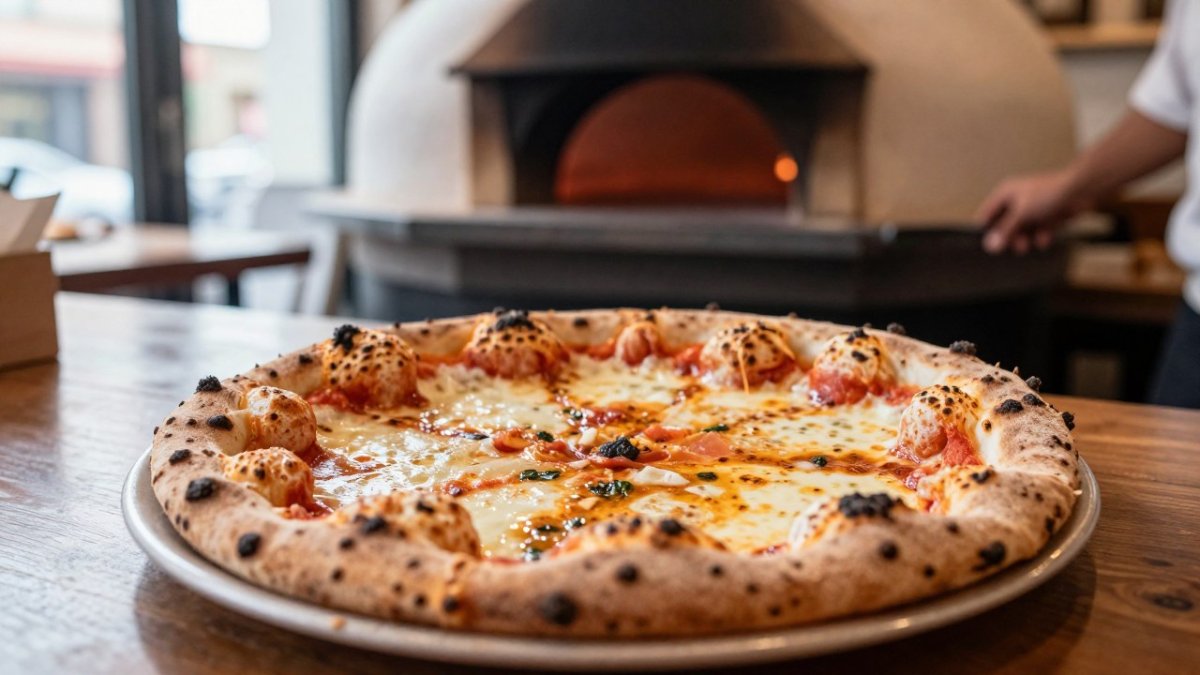
Authentic Neapolitan pizza crust is defined by its shape, texture and the way it is baked. The crust, called the cornicione, should rise into a puffy, airy rim around a thin, soft center.
Most Neapolitan-style pizza you find today is an adaptation. The ingredients and techniques may vary, so it helps to know what the traditional standard calls for. Here are the core traits to look for:
- A raised, airy cornicione with a soft, pillowy texture
- A thin center that bends easily without cracking
- Leopard spotting, the dark char bubbles that form during fast baking
- A tender, chewy bite rather than a crisp, cracker-like base
Watch out: A crust can look charred and still be dense inside. Char alone does not prove a pizza is authentic. Look at the rim and the bite together.
Traditional Dough Ingredients: Flour, Water, Yeast and Salt
Traditional Neapolitan dough uses a short list of ingredients, and the crust's character comes from how those few ingredients interact. Flour sets the structure. Because the protein content and milling of flour vary, bakers often judge a flour by how the dough behaves: whether it holds its shape when stretched, and whether it resists or relaxes under the hand.
Water controls hydration, and hydration is one of the biggest levers on the final crust. Wetter doughs tend to produce a more open crumb and a lighter, airier rim, but they are harder to shape. Drier doughs are easier to handle and produce a tighter, chewier structure. Small changes in water can make a noticeable difference, so weighing ingredients rather than measuring by volume is a useful habit.
Yeast drives the rise and contributes flavor during fermentation. Traditional practice often uses a small amount of yeast over a long, slow ferment, which produces a more complex flavor than a quick, heavily yeasted dough. Brewer's yeast or a natural starter can be used in some kitchens. Using too much yeast shortens the window for flavor development and can make the dough collapse when stretched.
Salt is more than a seasoning. It strengthens the gluten network and slows fermentation, which keeps the yeast working at a controlled pace. Too little salt produces a slack dough that over-ferments quickly and tastes flat. Too much can suppress the rise. The amount is usually modest relative to the flour weight, and it is best weighed for consistency.
When a substitute is used, such as bread flour or all-purpose flour, expect a different result. Higher-protein flours can make a chewier, more elastic crust that is harder to stretch thin. Lower-protein flours can produce a softer, more delicate base but may tear more easily. These substitutions can still yield a good pizza, but they will not reproduce the exact feel of a crust made with 00 flour.
Authentic Neapolitan Pizza Dough Recipe: Mixing, Kneading and Shaping
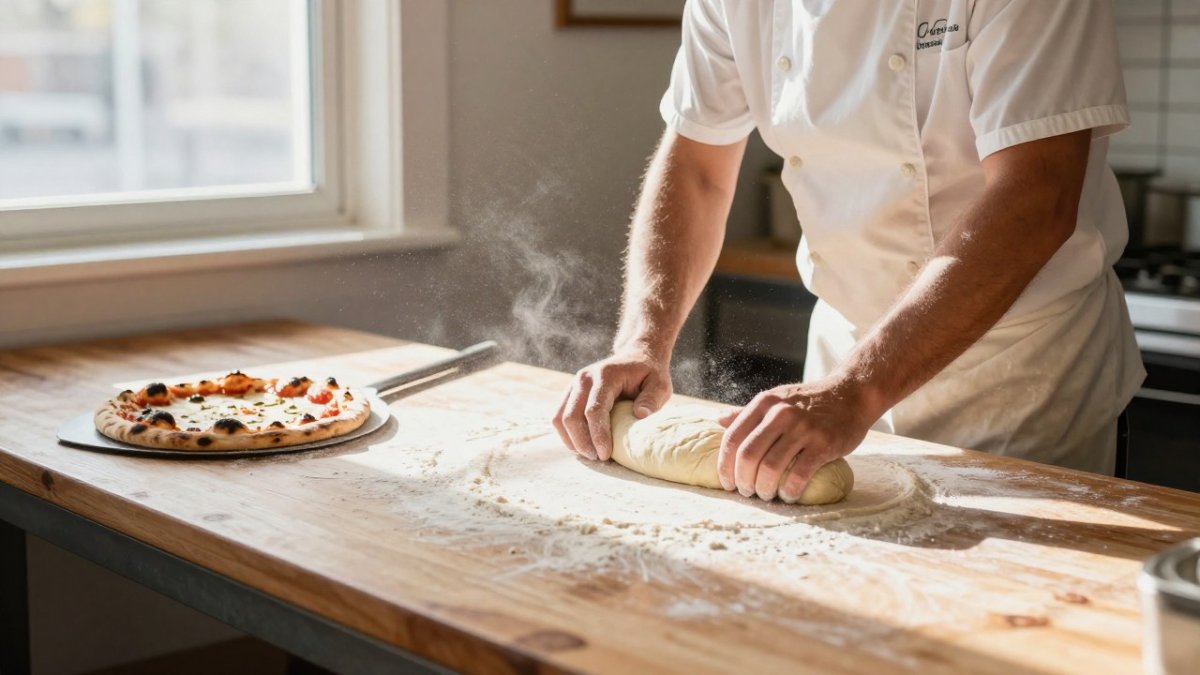
- Mix flour and water until no dry flour remains
- Add yeast and salt, then knead until smooth
- Divide into dough balls and let them rest
- Stretch each ball by hand, keeping the rim thick
Why a 12-Hour Neapolitan Pizza Dough Ferment Changes the Crust
Fermentation is where much of the flavor and texture develops. Shorter ferments can produce a denser base with less depth of flavor.
Neapolitan Pizza vs. Thin Crust: How to Tell the Difference
Thin crust and Neapolitan crust can look alike at first glance, but they differ in several ways. Thin crust is generally rolled and baked longer at a lower heat, so it turns crisp all the way through, while Neapolitan crust is stretched and baked very fast so it stays soft in the middle.
When you order, check the rim first. A thin crust has an even, crackly edge, while a Neapolitan crust has a taller, airier cornicione and a tender, bendable center.
Neapolitan Pizza Baking Temperature and Its Effect on Crust
High heat is what separates the traditional crust from most other pizza styles. That combination does three things at once. The water in the dough turns to steam quickly, which pushes the cornicione upward and creates the open, airy structure of the rim. The outside sets fast enough to form the characteristic dark spots, often called leopard spotting, while the interior stays moist and tender. A short bake also limits how much moisture escapes, which is why the center remains soft and bendable rather than cracker-like.
The effect of temperature is easiest to see by comparing outcomes. When the oven is too cool, the crust bakes slowly, dries out, and tends to turn stiff and pale without developing a lifted rim. When the heat is right but the dough is under-proofed, the rim may brown quickly yet stay dense, because the gas has not had time to form a fine network of bubbles. When the dough is over-proofed, the structure weakens and the rim can flatten or tear during baking.
For readers without a wood-fired oven, a home oven set to its highest temperature, preheated for a long time with a baking steel or stone, can raise the bottom of the pizza faster than a cold pan. Many home cooks also run the broiler briefly at the end to brown the top. Home ovens typically produce a softer, paler result than a wood-fired oven. Judge the result by rim height, the flexibility of the center, and the presence of some char.
A baking surface that is not fully heated will produce a pale, soggy base even if the top looks done. Preheat the stone or steel well before the pizza goes in.
The article's key baking facts are easier to compare side by side, using only what it states about each oven or bake condition.
| Condition | Effect on crust | Result to look for |
|---|---|---|
| Oven too cool | Slow bake, dries out | Stiff, pale crust with no lifted rim |
| Right heat, under-proofed dough | Rim browns fast but stays dense | Dense rim despite char |
| Over-proofed dough | Structure weakens | Rim flattens or tears |
| Home oven, highest heat, long preheat | Raises bottom faster than a cold pan | Softer, paler result than wood-fired |
| Stone or steel not fully heated | Base bakes poorly | Pale, soggy base even when top looks done |
Your Next Step: Judging a Crust Before You Order
Before you order, look at the rim, the center and the char. A good Neapolitan crust should show a raised, airy edge, a thin and flexible center and spots of dark char. Ask how the dough is made and whether the oven is wood-fired. See the signs of a true scratch kitchen to judge how the dough is made. Visit our menu to see how the restaurant's wood-fired pizzas are made, or learn how to identify real wood-fired pizza before you come in. When you are ready to compare options, see our list of wood-fired pizza spots in Winnsboro.
Frequently Asked Questions
What are the characteristics of an authentic Neapolitan pizza crust?
An authentic Neapolitan crust has a thin, soft center and a raised, puffy outer edge called the cornicione. The cornicione is airy and light with irregular charred spots, often called leopard spotting. The base should be pliable enough to fold without cracking. Baked quickly at very high heat, the crust stays tender rather than crisp, which is what separates it from a cracker-style thin crust.
What ingredients are used in Neapolitan pizza dough?
Traditional Neapolitan dough uses a short list of ingredients: flour, water, yeast and salt. Sugar, oil and fat are not part of the traditional recipe, which keeps the crust's flavor clean and lets the fermentation carry the taste.
Can you make Neapolitan-style pizza in a home oven?
A home oven can produce a Neapolitan-style crust, though not an identical one. Standard ovens top out well below the very high temperatures of a wood-fired oven, so home bakers often preheat a steel or stone for the longest possible time and use the oven's highest setting. The dough recipe and long fermentation matter as much as the oven when judging the crust.