 How-to
7 Signs a Restaurant Is a True Scratch Kitchen
Last Updated: November 5, 2026
Quick Summary
A scratch kitchen is a restaurant that prepares food from raw, basic ingredients on site instead of reheating pre-made or frozen products. A true scratch kitchen makes its own stocks, dressings, and dough, and hand-cuts produce each morning. At Pyke's Crossroads Restaurant, we run a 95% scratch kitchen.
- A tighter menu often signals real scratch cooking, since every dish takes genuine labor.
- Ask which dishes are made in-house from raw ingredients before you order.
- Scratch kitchens cost more to run through skilled labor, prep hours, and fresh-food waste.
- Raw proteins, eggs, and dairy must stay out of the danger zone between 40°F and 140°F.
- A scratch kitchen claim tells you how food was prepared, not whether sourcing is organic.
Table of Contents
- What Does Scratch Kitchen Mean, Exactly?
- Scratch Cooking Versus Frozen Food: The Real Difference
- Why Scratch-Made Food Tastes Different on the Plate
- How to Tell If a Restaurant Cooks From Scratch
- The Trade-Offs: What a Scratch Kitchen Costs You and Gives Back
- Food Safety and Ingredient Transparency in a Scratch Kitchen
- Book a Table and Taste the Difference Yourself
- Frequently Asked Questions
What Does Scratch Kitchen Mean, Exactly?
A scratch kitchen is a restaurant that prepares its food from raw, basic ingredients on site rather than reheating pre-made or frozen products.
The phrase gets used loosely.
In practice, scratch kitchen means the kitchen controls what goes into each dish: no mystery additives, no heat-and-serve shortcuts.
That distinction changes how food tastes, how a kitchen operates, and even how safely your meal is handled.
Scratch Cooking Versus Frozen Food: The Real Difference
The gap between scratch cooking and frozen food comes down to three things: ingredients, labor, and time.
Frozen and convenience foods are built for speed.
Scratch cooking flips that equation. Someone has to trim, chop, simmer, and taste, and a single soup might take hours.
Here's how the two approaches compare on the things diners actually notice:
| Factor | Scratch Cooking | Frozen or Convenience Food |
|---|---|---|
| Ingredients | Whole, raw, cut in-house | Pre-portioned, pre-cooked |
| Flavor control | Full, adjusted by taste | Fixed at the factory |
| Prep time | Hours of hands-on work | Minutes of reheating |
| Texture | Fresh, varied, made that day | Often uniform, softer |
| Transparency | Kitchen knows every component | Limited visibility into contents |
Many restaurants blend the two, sauces from scratch, frozen fries. That's why the next question matters: can you tell which is which?
Why Scratch-Made Food Tastes Different on the Plate
Scratch-made food tastes different because freshness and technique show up in ways you can sense immediately.
Scratch-made food is generally prepared on the day it is served, which can change how it tastes and feels.
Seasoning matters too. A scratch cook tastes as they go, adjusting salt, acid, and heat to the batch in front of them.
You'll notice it in small details:
- A salad dressing that tastes house-made, not bottled
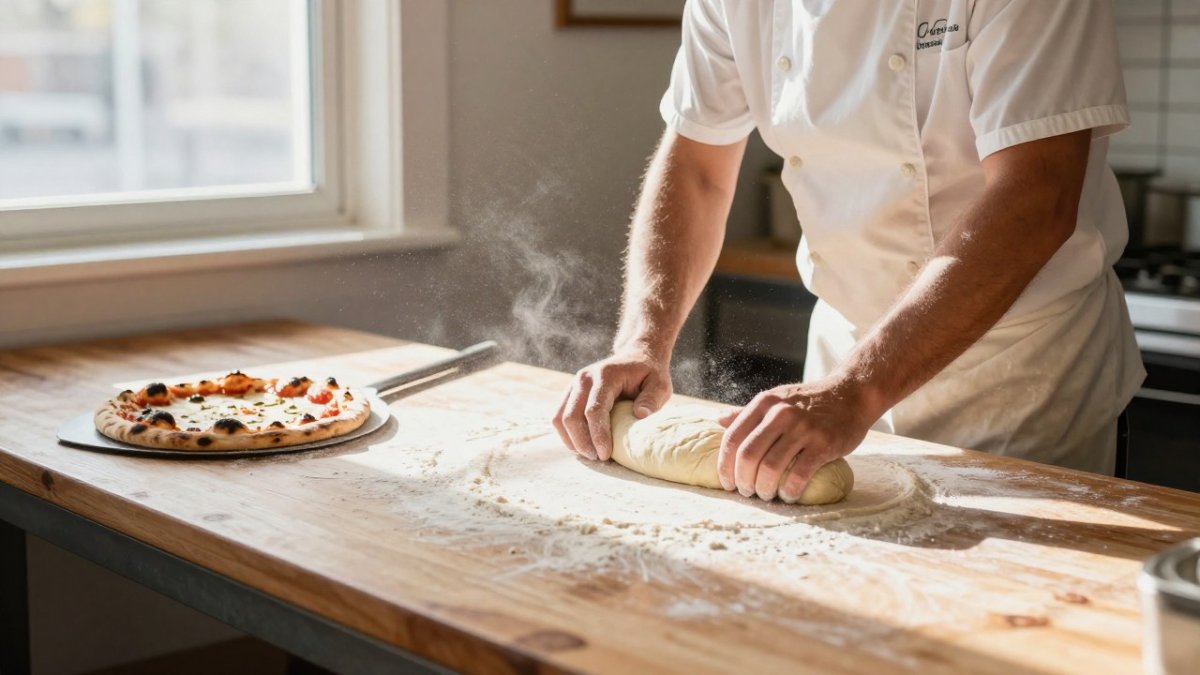
- Pizza crust with a blistered, chewy edge from made-from-scratch dough
- Soups with depth instead of a flat, salty finish
The difference is subtle but consistent. Once you eat scratch-made food regularly, shortcuts become easy to spot.
How to Tell If a Restaurant Cooks From Scratch
You can tell if a restaurant cooks from scratch by watching a few signals: the menu's size, the kitchen's visibility, and how dishes are described.
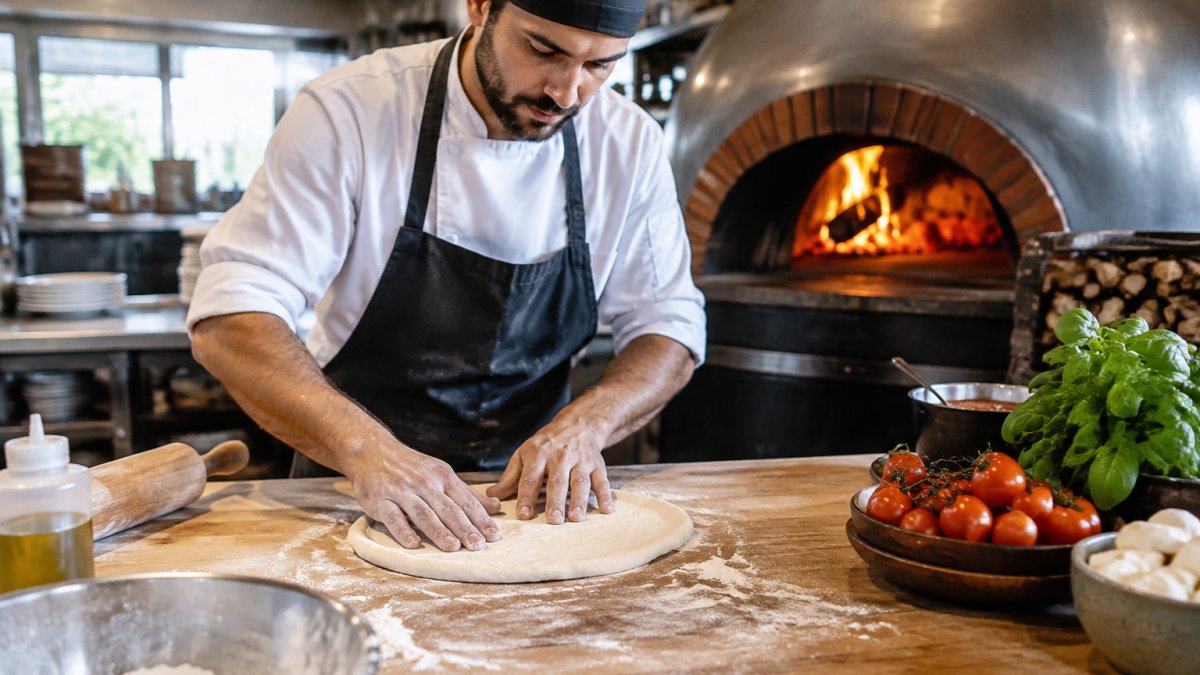
Start with the menu. A scratch kitchen usually runs a tighter menu because every dish takes real labor, while a massive menu covering dozens of cuisines often points to pre-made components.
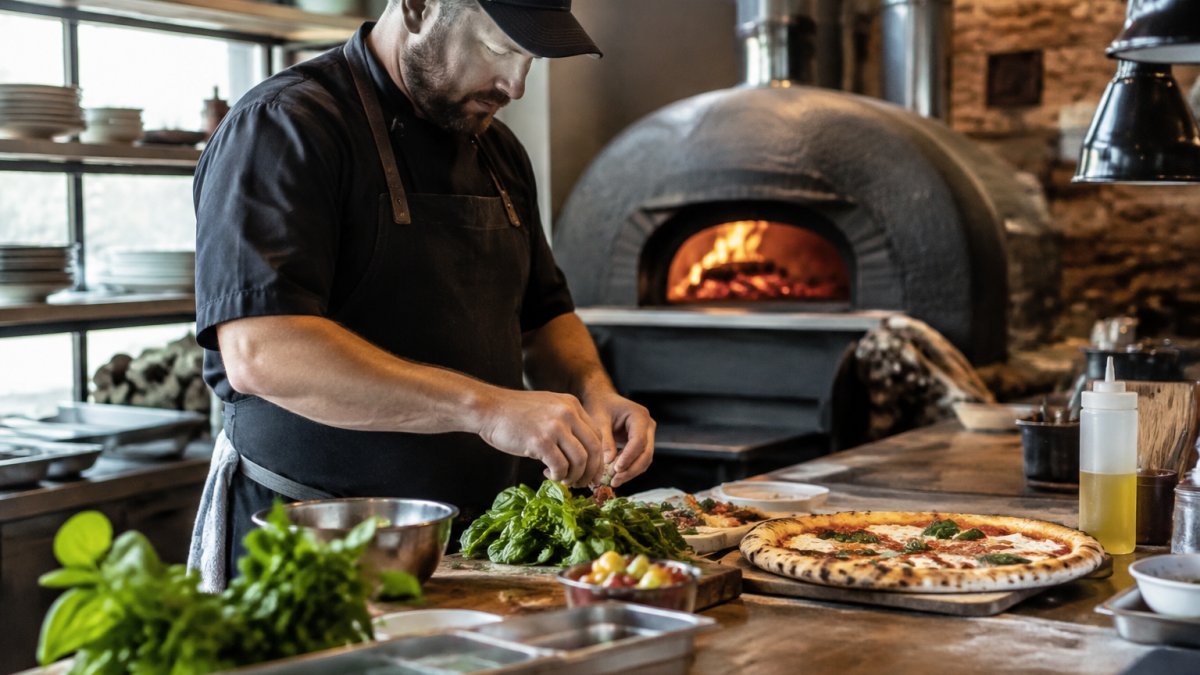
Next, look at the kitchen. Open kitchens, visible prep, and the sound of real cooking are good signs, as is a menu that changes with the season.
Ask These Questions Before You Order
The fastest way to learn a kitchen's real approach is to ask. Staff at a genuine scratch kitchen answer with confidence and detail.
Try these questions:
- Which dishes are made in-house from raw ingredients?
- Is the dough, sauce, or dressing made here or brought in?
- What's fresh today, and what changes with the season?
- Can the kitchen adjust a dish for dietary needs?
If the answers are vague or the server has to check on everything, that tells you something. For a closer look, our guide on what defines an authentic scratch kitchen breaks down the defining signs, and here's how to identify real wood-fired pizza before you order.
The Trade-Offs: What a Scratch Kitchen Costs You and Gives Back
A scratch kitchen costs more to run, and that shows up in two places: your bill and your wait time. Honest diners should know why, and what they get in return.
Cooking from raw ingredients means more skilled labor, more prep hours, and more waste from fresh food that doesn't keep.
The trade-off isn't all cost. Our breakdown of whether gourmet comfort food is worth it walks through the real cost picture, and this look at 7 signs scratch kitchen food is worth it helps you judge the payoff.
The wait can be longer, too. Dishes built to order take time.
Where the Money Actually Goes
Scratch cooking shifts a restaurant's cost structure in ways diners rarely see on the menu. Three line items generally move the most:
- Labor. A scratch kitchen needs cooks who can break down proteins, build stocks, and taste and adjust seasoning, not just reheat and plate. Those roles command higher wages and need more bodies during prep, while a convenience kitchen can run a smaller, less-skilled crew.
- Prep hours. Trimming, chopping, simmering, and portioning happen in the quiet hours before the doors open, and that work doesn't disappear just because the dining room is empty.
- Waste. Fresh ingredients spoil, whole produce has trim loss, and Monday's dressing may not be good by Friday. Convenience products sit in a freezer for months, which is exactly why they cost less to hold.
Those costs don't vanish, they generally get distributed across the menu. Pricing depends on quantity, dates and delivery; for current prices, visit the Pyke's Crossroads Restaurant website.
Menu Flexibility Cuts Both Ways
A scratch kitchen can change its menu on short notice. If the produce looks good at the market, the chef can build a special around it. If a supplier runs short, the kitchen can substitute and adjust the recipe.
The same flexibility has a cost: consistency. A convenience kitchen can promise the same dish tastes identical every visit because it came from the same factory spec.
Wait Times and Service Pace
Dishes built to order take time. A soup that simmers for hours is ready when you sit down, but a hand-formed pizza or a sauce finished à la minute is not.
Watch out: a scratch kitchen that promises both a massive menu and fast ticket times is usually hiding convenience products somewhere in the lineup.
Best for: diners who value freshness and flavor over speed and the lowest price. Skip if: you need a fast, cheap meal and don't care how it's made.
Food Safety and Ingredient Transparency in a Scratch Kitchen
Food safety in a scratch kitchen depends on strong handling practices, because raw ingredients carry more risk than pre-cooked ones.
Raw meat, eggs, and produce all need careful temperature control and clean prep. The FDA Food Code sets the handling standards restaurants follow, and a well-run scratch kitchen builds those rules into daily prep.
Ingredient transparency is the upside. The USDA food labeling guidance governs how packaged foods are labeled, but a scratch kitchen can tell you directly what's on your plate.
At Pyke's Crossroads, that transparency is part of how we operate. When you ask what's in a dish, we can tell you, because we made it.
The Mechanisms That Keep Raw Food Safe
Scratch cooking puts raw ingredients in more hands, more often, so the safety systems have to be tighter than in a reheat kitchen. The core controls are unglamorous but specific:
- Temperature control. Raw proteins, eggs, and dairy have to stay out of the danger zone between 40°F and 140°F. A scratch kitchen checks cooler temps daily, calibrates thermometers, and cooks to internal temperature rather than by look or time.
- Cross-contamination barriers. Raw chicken and ready-to-eat salad can't share a board, knife, or gloves. Color-coded cutting boards, separate prep zones, and well-placed hand-wash stations are the standard defenses.
- Cooling and holding. A scratch stock or soup has to cool fast and hold hot. Large batches cooling slowly in a deep pot are a classic risk; well-run kitchens portion into shallow pans and track cooling times.
- Allergen communication. A scratch kitchen can usually tell you what's in a dish, but it also has to manage shared equipment, a sauce made in the same pot as a shellfish stock is a risk even if the recipe is clean. Ask how the kitchen handles shared fryers, grills, and prep surfaces.
None of this is unique to scratch cooking, every restaurant is supposed to follow the same food code, but scratch kitchens have more raw-ingredient touchpoints, so the margin for sloppy practice is thinner.
What 'Made From Scratch' Does and Does Not Guarantee
This is the part most diners miss. A scratch kitchen claim tells you how food was prepared, not everything about what's in it.
What it does guarantee, when the claim is honest: the kitchen started with raw ingredients and did the work on site. Stocks, sauces, dressings, dough, and produce prep happened in-house rather than arriving pre-made.
What it does not guarantee:
- Sourcing quality. A scratch kitchen can still buy commodity produce and conventional proteins. Scratch tells you about preparation, not farming practices, animal welfare, or whether ingredients are organic.
- Nutritional claims. Made-from-scratch food can be heavy, salty, or high in butter and cream. Scratch is not a synonym for healthy.
- Allergen safety. A scratch kitchen may use shared equipment and handle multiple allergens in a small space. Always tell your server about allergies and ask how the kitchen manages them.
- Consistency. As covered above, scratch cooking is only as consistent as the cooks and the supply.
Questions That Reveal Real Transparency
A kitchen that genuinely cooks from scratch can answer sourcing and allergen questions without a trip to the back office. Try these:
- Where do your produce and proteins come from, and does that change with the season?
- Which menu items contain wheat, dairy, eggs, soy, or shellfish, and how do you prevent cross-contact?
- Are your stocks, sauces, and dressings made here, or do any arrive pre-made?
- How do you handle a guest with a severe allergy during a busy service?
If the answers are specific and consistent, you're talking to a kitchen that knows its food. If they're vague, that tells you something too, and it's worth asking before you order, not after.
Book a Table and Taste the Difference Yourself
Reading about scratch cooking only gets you so far. The real test is on the plate.
At Pyke's Crossroads Restaurant, our 95% scratch kitchen puts an imaginative twist on traditional home-cooked dishes.
The challenge is simple: eat one meal made from scratch and see if you can go back to the shortcuts. We don't think you will. Get started with Pyke's Crossroads Restaurant and taste what a true scratch kitchen does with dinner.
Frequently Asked Questions
What makes a kitchen a true scratch kitchen?
A true scratch kitchen prepares dishes from raw ingredients rather than opening bags, cans, or frozen pouches. That means sauces are built from stock and aromatics, dough is mixed in-house, and sides like mashed potatoes start as whole potatoes. Most restaurants draw a line somewhere, so ask what percentage of the menu is made in-house. A kitchen that claims 95% scratch is telling you nearly everything on the plate was built there, not just assembled.
Do scratch kitchens use any frozen ingredients?
Some do, and that is not automatically a red flag. Frozen shrimp, peas, or fruit can be higher quality than tired fresh versions, depending on the season and supply. The distinction that matters is scratch cooking versus frozen food that arrives pre-seasoned, pre-breaded, or pre-cooked and only needs reheating. Ask whether the freezer holds raw ingredients or finished entrées. The answer tells you which kind of kitchen you are sitting in.
Are scratch-made meals healthier than frozen meals?
Often, but not always. Scratch-made food gives the kitchen control over sodium, sugar, and additives, and you can ask for adjustments. Frozen or pre-made items frequently carry higher sodium to survive storage and reheating. That said, a scratch kitchen can still serve fried chicken and cream sauces. Health depends on what you order. The scratch advantage is transparency: fewer unknown ingredients and a kitchen that can tell you exactly what went into your dish.
How can you tell if a restaurant cooks from scratch before you book?
Check the menu for clues. Short menus, daily specials, and dishes that change with the season usually signal scratch cooking, because fresh ingredients run out. Ask about a specific item, like whether the salad dressing or pizza dough is made in-house. Look for an open kitchen or a staff that can answer ingredient questions without checking with someone else. Reviews that mention freshness and consistency are another signal worth reading before you reserve a table.