 How-to
Why Craft Beer Tastes Better Fresh: A Guide to Peak Flavor
Last Updated: November 3, 2026
Quick Summary
Craft beer tastes better fresh because the hop oils and malt compounds that give it aroma and flavor break down through oxidation once oxygen reaches the beer, leaving it stale, cardboard-like, or oddly sweet. Light speeds this decline by creating light-struck, skunky flavors, so cold, dark storage and drinking hoppy styles young preserve the bright taste.
- Oxygen is the main reason craft beer loses its character, changing it within days.
- Brown glass blocks more light than green or clear, and cans block light completely.
- Hoppy pale ales and IPAs peak within weeks of packaging; barrel-aged beers hold for months or years.
- Store craft beer cold, dark, and upright, and buy only what you will drink within a few weeks.
- If several beers on one tap taste off alike, suspect the draft system, not age.
Table of Contents
- The Chemistry Behind Why Fresh Craft Beer Tastes Better
- How Long Does Craft Beer Stay Fresh?
- How to Tell If Beer Is Stale
- Draft Beer vs Canned Beer Taste: What Changes and Why
- How to Store Craft Beer at Home
- Carbonation, Serving Temperature, and the Freshness You Taste
- Aging Versus Freshness: When Time Helps and When It Hurts
- Tasting Fresh Texas Craft Beer at Pyke's Crossroads
- Frequently Asked Questions
The Chemistry Behind Why Fresh Craft Beer Tastes Better
Fresh beer tastes better because the same compounds that make it smell and taste alive are also the ones that fade fastest. The difference between a beer tapped this week and one that has sat for months is not subtle.
Two forces do most of the damage: oxygen and light. Both start working the moment a beer leaves the tank, and both are nearly impossible to undo. Understanding them is the fastest way to drink better beer.
Oxygen and Oxidation: The Silent Flavor Thief
Oxygen is the main reason craft beer loses its character over time.
The process is called oxidation. Hop oils and malt compounds react with oxygen and break down. The result is a beer that tastes stale, cardboard-like, or oddly sweet.
A common mistake is assuming a sealed can or bottle is safe. It is safer, not safe. Every package holds some oxygen, and every pour introduces more.
Light Exposure and Light-Struck Flavor
Light damages beer faster than most drinkers realize. Ultraviolet light breaks down compounds from hops and creates a compound nearly identical to the smell of a skunk (lightstruck. | The Oxford Companion to Beer). Brewers call it light-struck flavor.
- Brown glass blocks more light than green or clear glass
- Cans block light completely
- A bottle left in a sunny window can turn in hours
This is one reason many craft breweries choose cans.
How Long Does Craft Beer Stay Fresh?
There is no single answer, because freshness depends on the style, the package, and how the beer is stored. A hoppy pale ale may taste best within weeks of packaging. A barrel-aged stout can improve for months or years.
A practical rule: the more hops and the lower the alcohol, the shorter the window. High-hop beers lose aroma first. Strong, dark beers hold up longer.
Freshness by Beer Style
Different styles age at very different rates. Here is how we think about it when we plan our tap list:
| Style | Peak Freshness Window | What Fades First |
|---|---|---|
| Hoppy pale ale or IPA | Weeks after packaging | Hop aroma and citrus notes |
| Pilsner or light lager | 1-3 months | Crispness and clean finish |
| Wheat beer | 1-3 months | Yeast character and foam |
| Amber or brown ale | 2-4 months | Malt balance |
| Stout or porter | 3-6 months | Roast depth |
| Barrel-aged or high-alcohol | Months to years | Improves, then slowly declines |
Treat these as general guidance, not law. Always check the package date when you can.
How to Tell If Beer Is Stale
Stale beer announces itself in predictable ways, and you can often catch it before your first sip. But the most useful skill is spotting the risk before you buy, not after you pour. Here is how to check freshness at the shelf, at the bar, and in the glass.
Check the package date before you buy
Most craft brewers print a packaging date or a best-by date on the can or bottle. The format varies: some use a Julian code (a three-digit day-of-year plus a year digit), some print a clear month/day/year, and some use a canned-on date.
- Canned-on dates are the most useful because they tell you exactly how old the beer is.
- Best-by dates are set by the brewer and vary widely by style, so treat them as a ceiling, not a guarantee.
- No date at all is a yellow flag on a hoppy beer. It does not mean the beer is bad, but you are buying blind.
Watch out: a best-by date printed far in the future on a hoppy IPA is not a freshness signal. Some brewers set long windows for logistics, and hop aroma still fades on its own schedule.
Read the storage conditions
Where the beer sat matters as much as how old it is. A recently packaged IPA that spent those weeks in a warm, sunlit display can taste older than a more mature IPA that stayed cold and dark.
- Refrigeration: cold storage slows the oxidation reactions that stale beer. A cold case is a better bet than a warm shelf for hoppy styles.
- Light exposure: clear and green glass let in the most light. Brown glass blocks more. Cans block it completely. A bottle sitting in direct sun on a windowsill is a risk no matter its date.
- Upright storage: bottles stored upright keep sediment settled and caps clean. Long-term sideways storage can leave yeast and sediment in the neck.
Sensory signs in the glass
Once the beer is poured, the cues are consistent across styles:
- Smell: cardboard, wet paper, or a skunky note. The skunky smell is light-struck flavor, not age, but both read as stale.
- Look: a flat pour, weak head, and no lacing on the glass point to lost carbonation or a tired beer.
- Taste: dull, sweet, or metallic instead of bright. Hoppy beers lose citrus and pine first; malt-forward beers go flat and papery.
Stale beer is generally not dangerous, but it can be disappointing.
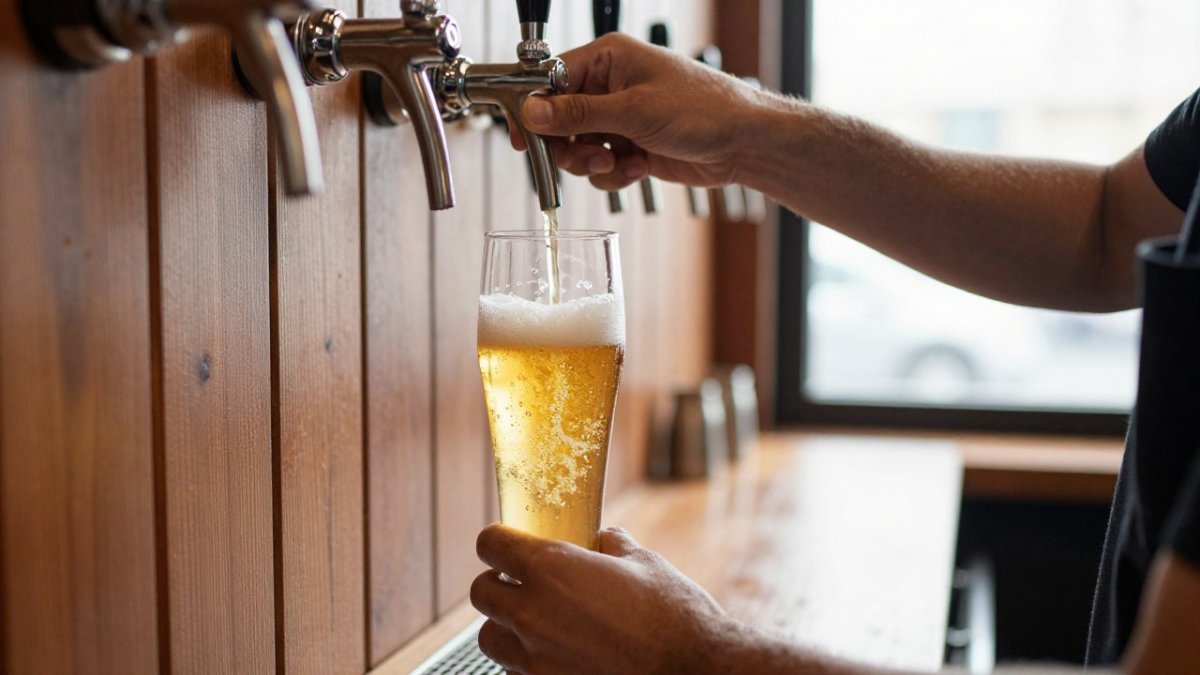
Draft Beer vs Canned Beer Taste: What Changes and Why
Draft beer and canned beer can taste different for reasons that have nothing to do with freshness. Draft is served from a keg through a tap system. Cans are sealed at the brewery and opened by you.
What packaging does to flavor
Cans protect beer from light and oxygen better than any bottle. That is why many brewers now package their best hoppy beers in cans. A can is an airtight, lightproof package, and modern canning lines are built to keep dissolved oxygen low.
Draft, when handled well, delivers a fresh, lively pour that is hard to match. The keg is a large, sealed vessel, and the beer inside is protected from light.
Separating freshness effects from draft-system effects
Not every bad draft beer is stale. Sometimes the problem is the tap system itself. Dirty beer lines, wrong pressure, or a warm keg will ruin a fresh beer.
- Line cleaning: beer lines need regular cleaning or they add off-flavors. A buttery, diacetyl-like note or a sour, dirty taste that appears across multiple beers on the same tap often points to the lines, not the beer.
- Temperature: kegs should stay cold from delivery to pour. A warm keg pours foamy and tastes flat because carbonation breaks out of solution. If the first pour is all foam and the beer tastes lifeless, suspect temperature before age.
- Pressure: wrong gas pressure creates foam or flatness. Too much pressure pushes foam; too little leaves the beer flat and the pour slow. A system balanced for the style should pour a steady stream with a reasonable head.
- Glassware: a greasy glass kills head retention. A glass with residual detergent or lip balm will flatten the foam and make a fresh beer seem tired.
A practical diagnostic: if several beers on the same tap taste off in the same way, the problem is likely the system.
Watch out: a cold, clean draft pour can still be stale if the keg sat warm in storage before it was tapped.
How to Store Craft Beer at Home
Store craft beer cold, dark, and upright, and drink it sooner than you think. That is the whole game. Everything else is detail.
- Keep bottles and cans in the fridge, not on a warm shelf
- Avoid light, especially sunlight and bright kitchen lighting
- Store upright so sediment settles and caps stay clean
- Skip the garage or shed, where temperatures swing
A common mistake is buying a hoppy beer and saving it for a special occasion. By the time the occasion arrives, the hop aroma is gone. Drink the hoppy beers first.
Carbonation, Serving Temperature, and the Freshness You Taste
Carbonation and temperature change how fresh a beer seems, even when the beer has not changed at all.
Serving temperature matters just as much. Too cold and you numb the flavor. Too warm and the beer tastes heavy and flat.
- Hoppy ales: serve cool, not ice cold, so aroma shows
- Lagers and pilsners: serve colder for crispness
- Stouts and porters: serve closer to cool room temperature
- Glassware: use a clean, dry glass every time
A proper pour with a good head of foam does more for perceived freshness than most drinkers expect. Foam releases aroma.
Aging Versus Freshness: When Time Helps and When It Hurts
Aging and freshness are not opposites. They are two different goals, and the style decides which one you want.
Freshness is the goal for hoppy, light, and delicate beers. You want them young and bright.
What most guides miss is that aging is not a fix for a bad beer. Time can round off a rough edge. It cannot bring back faded hops.
Tasting Fresh Texas Craft Beer at Pyke's Crossroads
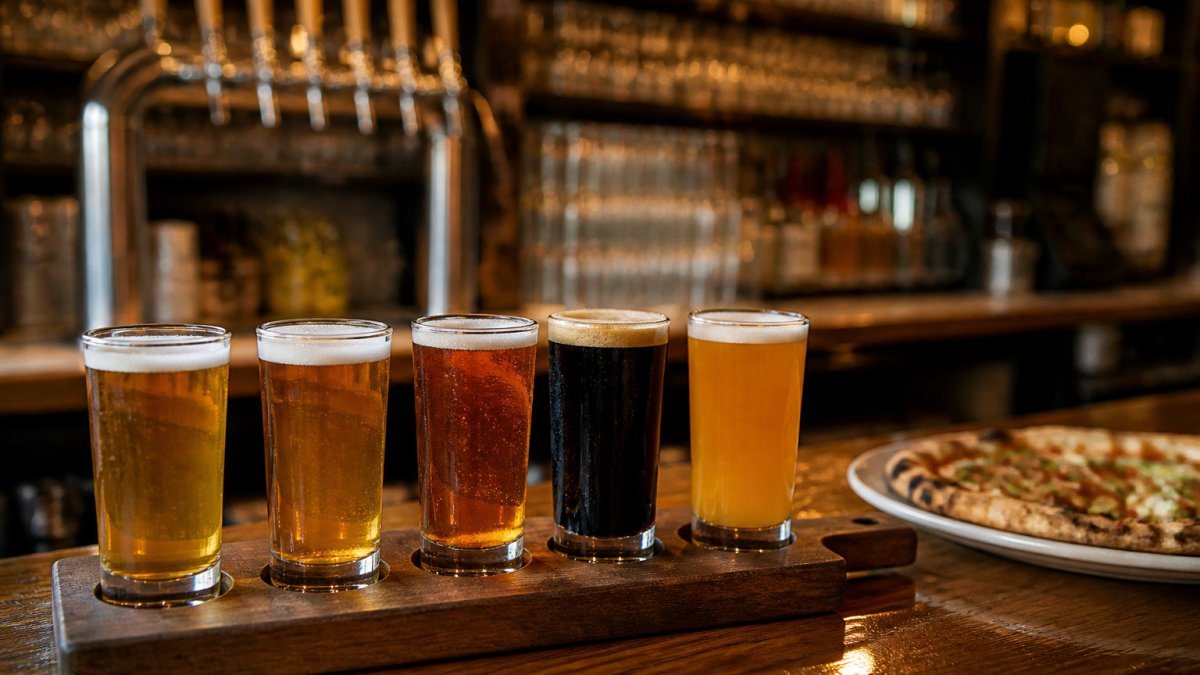
The best way to understand freshness is to taste it side by side. Pyke's Crossroads Restaurant focuses on Texas-made craft brews, so you can compare a fresh pour against your usual go-to.
If you are new to craft beer, a flight is an easy way to compare styles. See The Barrelhouse Alternative for Dining: Winnsboro Options for the dining-and-drinks option at Pyke's Crossroads.
Frequently Asked Questions
Why does craft beer taste better when it is fresh?
Fresh craft beer tastes better because the compounds that create hop aroma and flavor are volatile and start breaking down as soon as the beer is packaged. Oxygen slowly oxidizes those compounds, turning bright citrus and pine notes into cardboard or paper flavors. Light degrades hop acids into a skunky aroma. Carbonation also escapes over time, flattening the mouthfeel. A fresh pour preserves the aromatics, foam, and carbonation the brewer intended, which is why a just-tapped craft beer often tastes more expressive than one that has sat on a shelf.
How long does craft beer stay fresh after packaging?
Craft beer freshness depends on style and storage. Hop-forward styles like IPAs and pale ales decline fastest, while malt-forward and higher-alcohol styles generally hold up longer. Bottle-conditioned and barrel-aged beers can improve for months or years. Always check the packaged-on date, store the beer cold, and drink hoppy styles first to catch them at peak flavor.
How can you tell if craft beer is stale?
Stale craft beer shows clear signs before you finish the glass. Look for a dull, papery, or cardboard-like aroma, muted hop character, and a flat or syrupy mouthfeel. The foam may dissipate quickly, and the color can turn slightly darker or hazy. If a beer that should taste bright and citrusy instead tastes sweet, stale, or lifeless, oxidation has likely set in. Check the packaged-on date on the can or bottle, and at a bar, ask when the keg was tapped.
Does draft beer taste better than canned or bottled beer?
Draft beer can taste better because it avoids the oxygen and light exposure that packaged beer faces, and a well-maintained tap system delivers fresh carbonation. But draft quality depends on line cleaning, keg turnover, and serving temperature. A neglected tap line can make draft taste worse than a fresh can. Cans are actually excellent for freshness because they block light completely and seal tightly. The deciding factor is how the beer was stored and handled, not the package alone.
Fresh beer rewards you for paying attention: check package dates, store it cold and dark, and drink hoppy styles first. At Pyke's Crossroads Restaurant, we pour Texas craft brews from nine rotating taps alongside wood-fired pizza from our 95% scratch kitchen, with live music from local artists most nights. Come taste what fresh really means. Get started with Pyke's Crossroads Restaurant and find your new favorite pour.